Licious Business Model of Branded Meat Sold Online and in Stores
Licious sells its own meat and seafood through apps, quick commerce and stores.

Key Takeaways
- Licious reported FY26 revenue of ₹1,166 crore, up 47% from FY25.
- Its EBITDA loss was ₹187 crore in FY26 and its FY25 net loss was ₹218.3 crore.
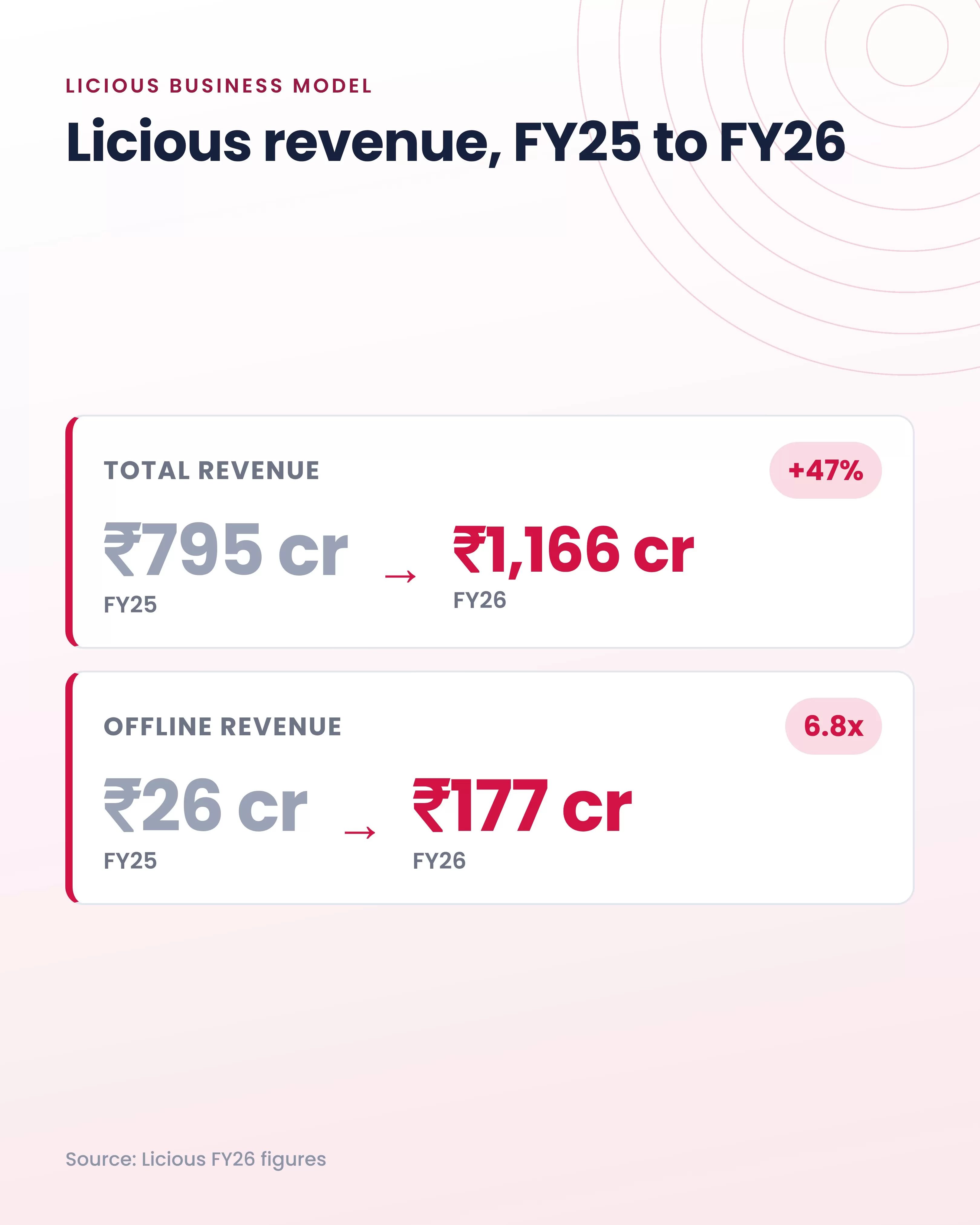
- Offline revenue rose from ₹26 crore in FY25 to ₹177 crore in FY26.
- Repeat customers made up 94% of Licious's business in FY26.
Table of Contents 12 sections
- Licious at a glance
- What Licious does
- How Licious makes money from its own products
- Offline stores in the Licious business model
- Licious's Business Model Canvas
- Licious India revenue and losses over three years
- Customers and repeat buying
- Licious's journey so far
- Who Licious competes with
- Challenges Licious faces
- Conclusion on the Licious business model
- FAQs
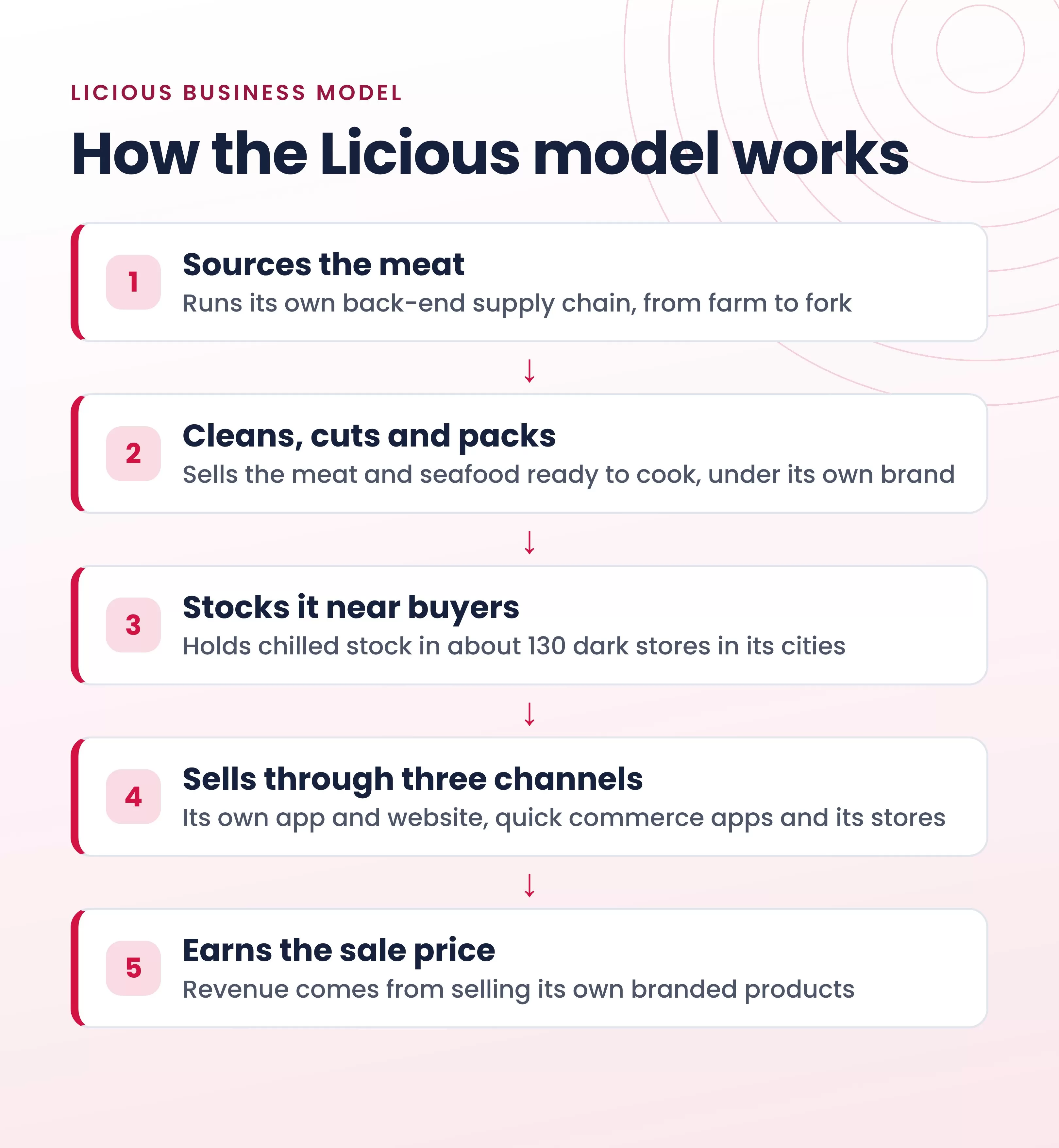
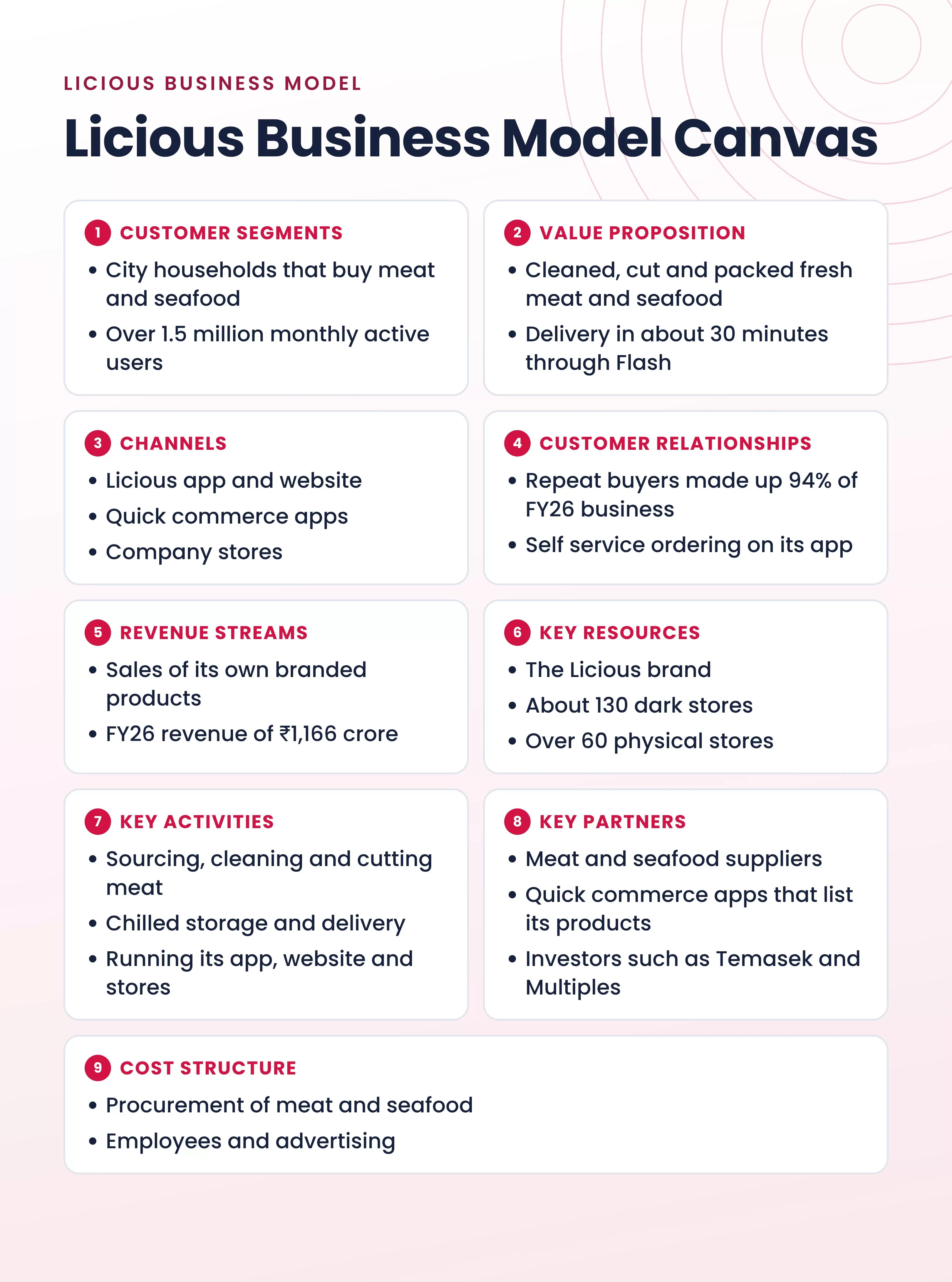
In the Licious business model, the company sells its own brand of fresh meat, seafood, cold cuts and ready to cook food, and keeps the money from each sale. It sources and processes the meat through its own back-end supply chain and sells it on its app and website, through quick commerce apps and in its own stores.
Licious reported revenue of ₹1,166 crore for FY26 (the year to March 2026), 47% more than the ₹795 crore of FY25. It is not yet profitable. Its EBITDA loss was ₹187 crore in FY26, and its net loss for FY25 was ₹218.3 crore.
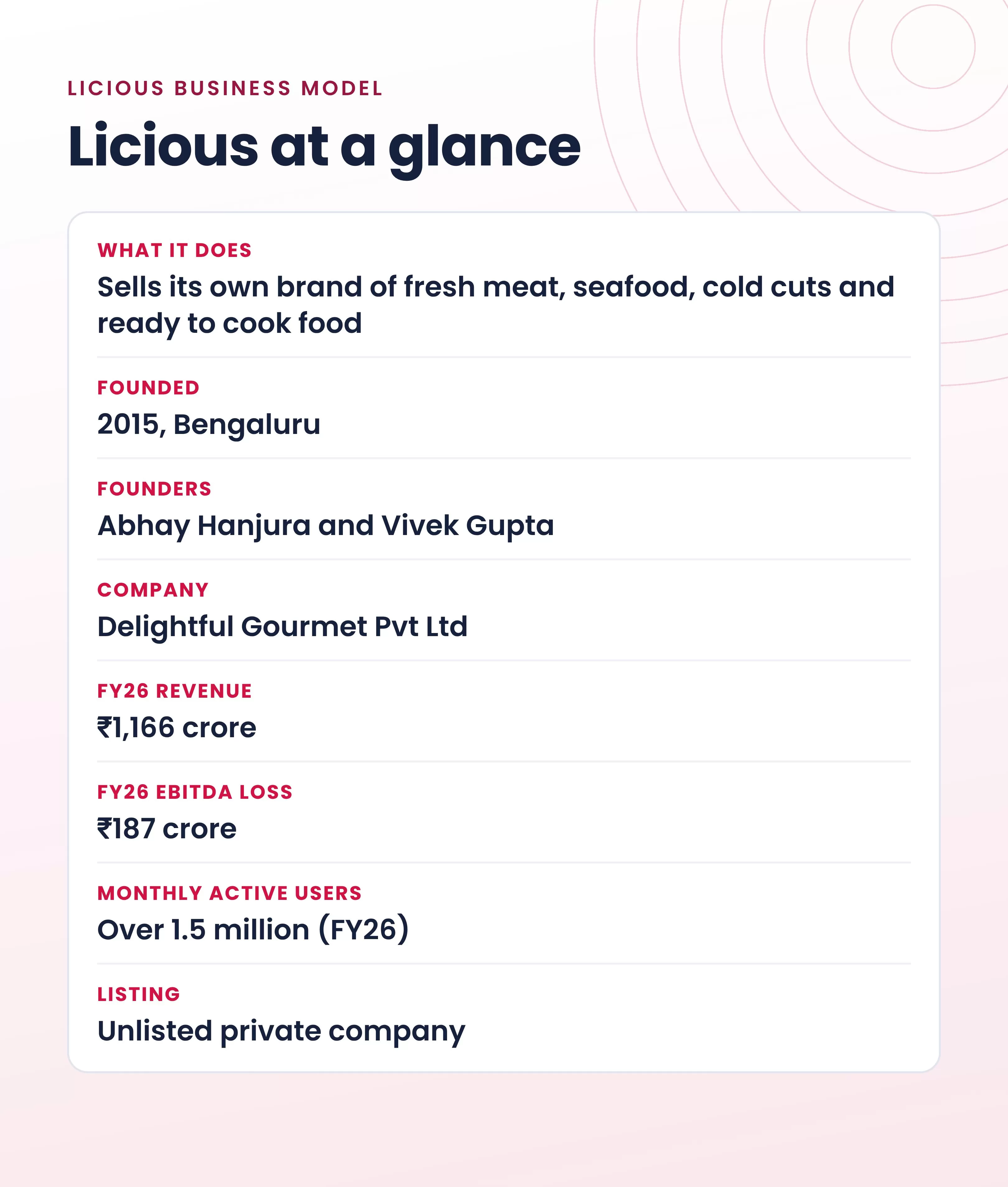
Licious at a glance
| Item | Detail |
|---|---|
| What it does | Sells its own brand of fresh meat, seafood, cold cuts and ready to cook food |
| Founded | 2015, Bengaluru |
| Founders | Abhay Hanjura and Vivek Gupta |
| Company name | Delightful Gourmet Pvt Ltd |
| Revenue (FY26) | ₹1,166 crore |
| EBITDA loss (FY26) | ₹187 crore |
| Net loss (FY25) | ₹218.3 crore |
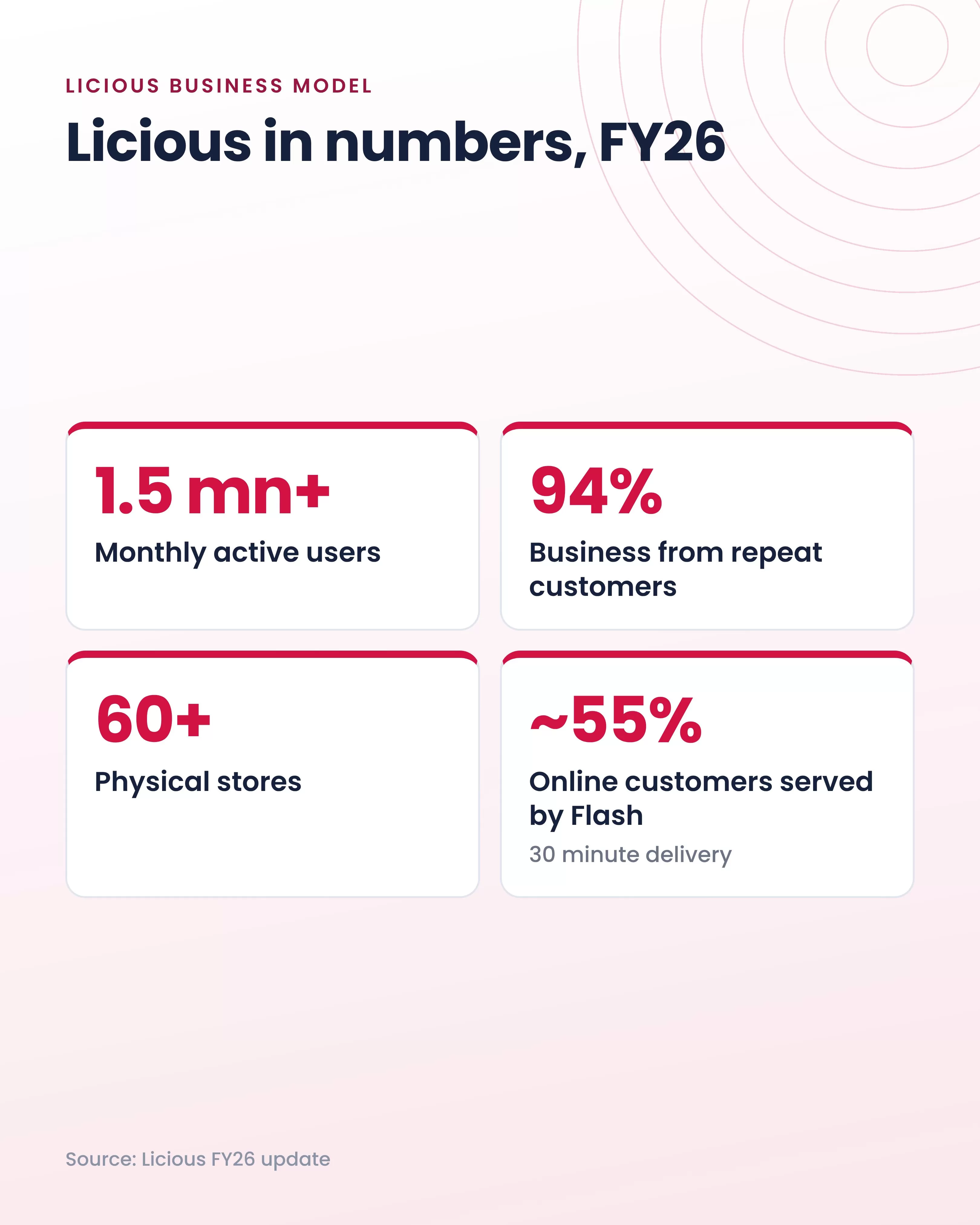
| Monthly active users | Over 1.5 million (FY26) |
| Listing | Unlisted private company |
What Licious does
Licious sells meat and seafood that is already cleaned, cut and packed, so it is ready to cook. Its range covers chicken, mutton, fish and seafood, eggs, cold cuts and ready to cook items such as marinated meat.
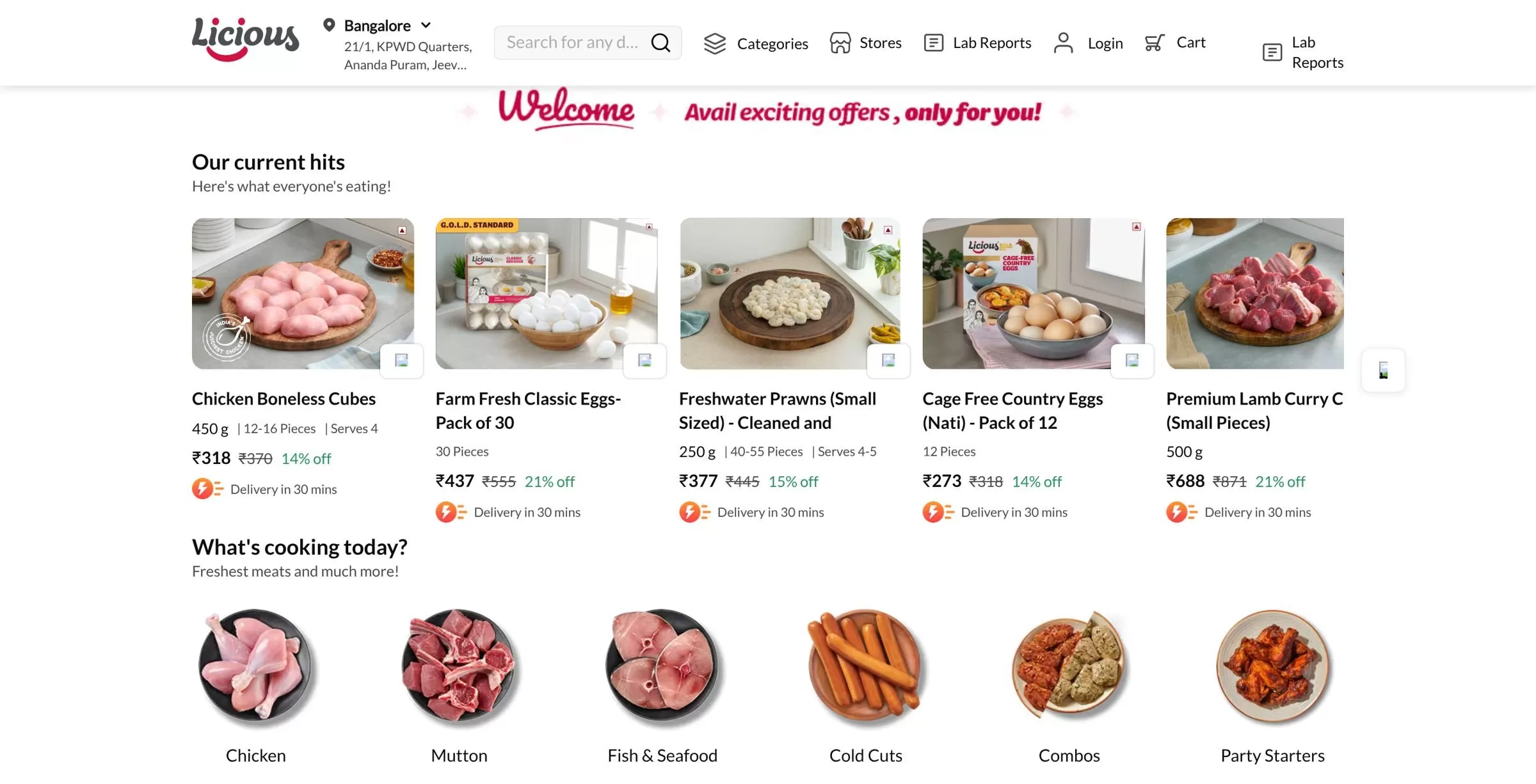
It describes its model as farm to fork. It runs its own back-end supply chain and puts its own brand on what it sells. Orders are packed from about 130 dark stores, which are small warehouses close to buyers. Its Flash service delivers in about 30 minutes and serves about 55% of its online customers.
How Licious makes money from its own products
Licious earns almost all its money from one thing, the sale of its own products. It does not charge sellers a commission like a marketplace. The price a customer pays for a pack of chicken or prawns is its revenue.
Licious revenue model by channel
The same products reach buyers in three ways.
- Online. Its own app and website, plus quick commerce apps that list its packs. Online revenue rose 28% to about ₹1,000 crore in FY26.
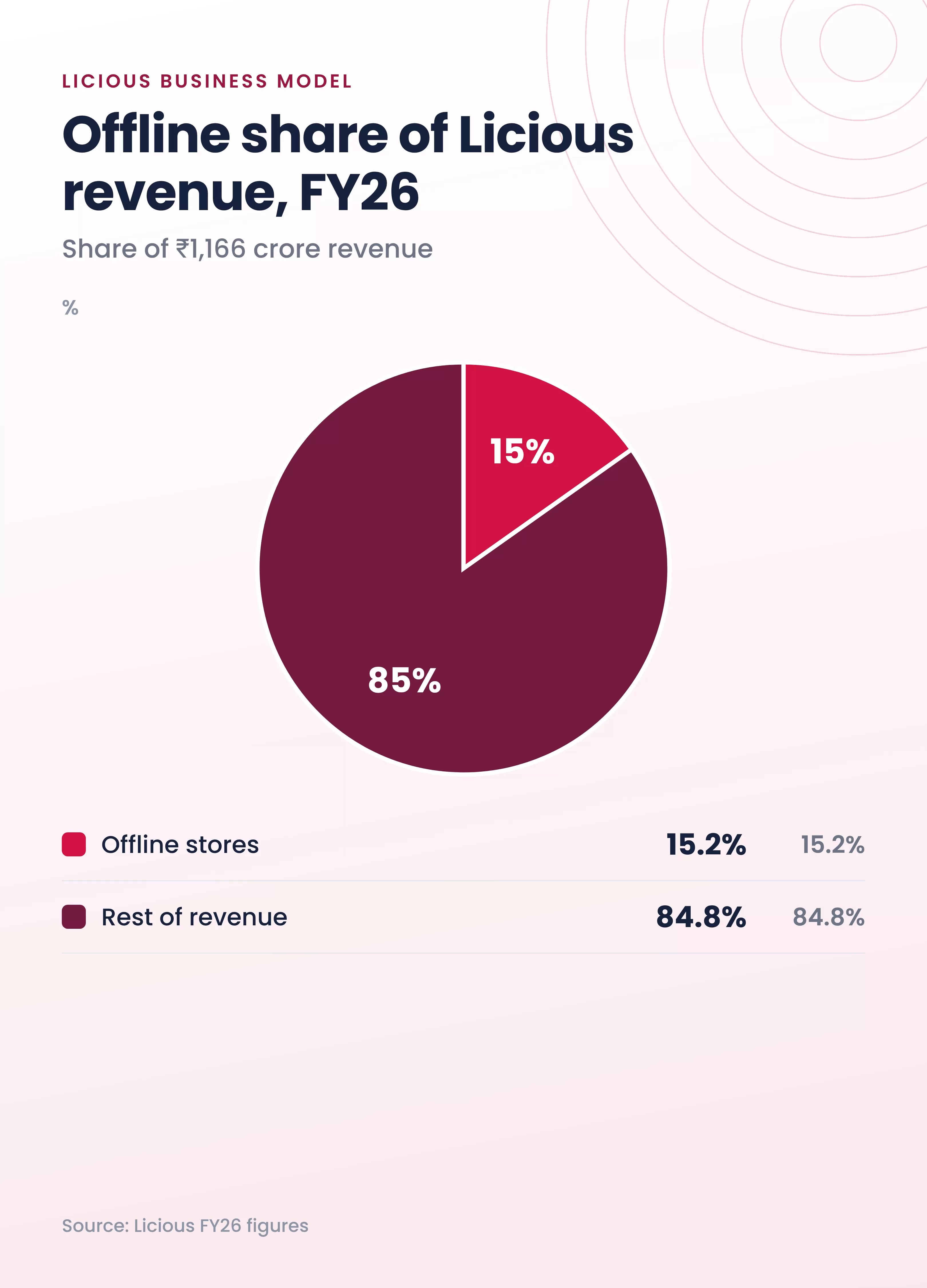
- Offline stores. Its own physical stores, which number over 60. Offline revenue rose from ₹26 crore in FY25 to ₹177 crore in FY26.
On these numbers, offline stores brought in about 15.2% of FY26 revenue.
Offline stores in the Licious business model
Offline revenue in FY26 was 6.8 times its FY25 level. Part of the store network came from My Chicken and More, a meat store chain that Licious bought.
Licious's Business Model Canvas
Licious India revenue and losses over three years
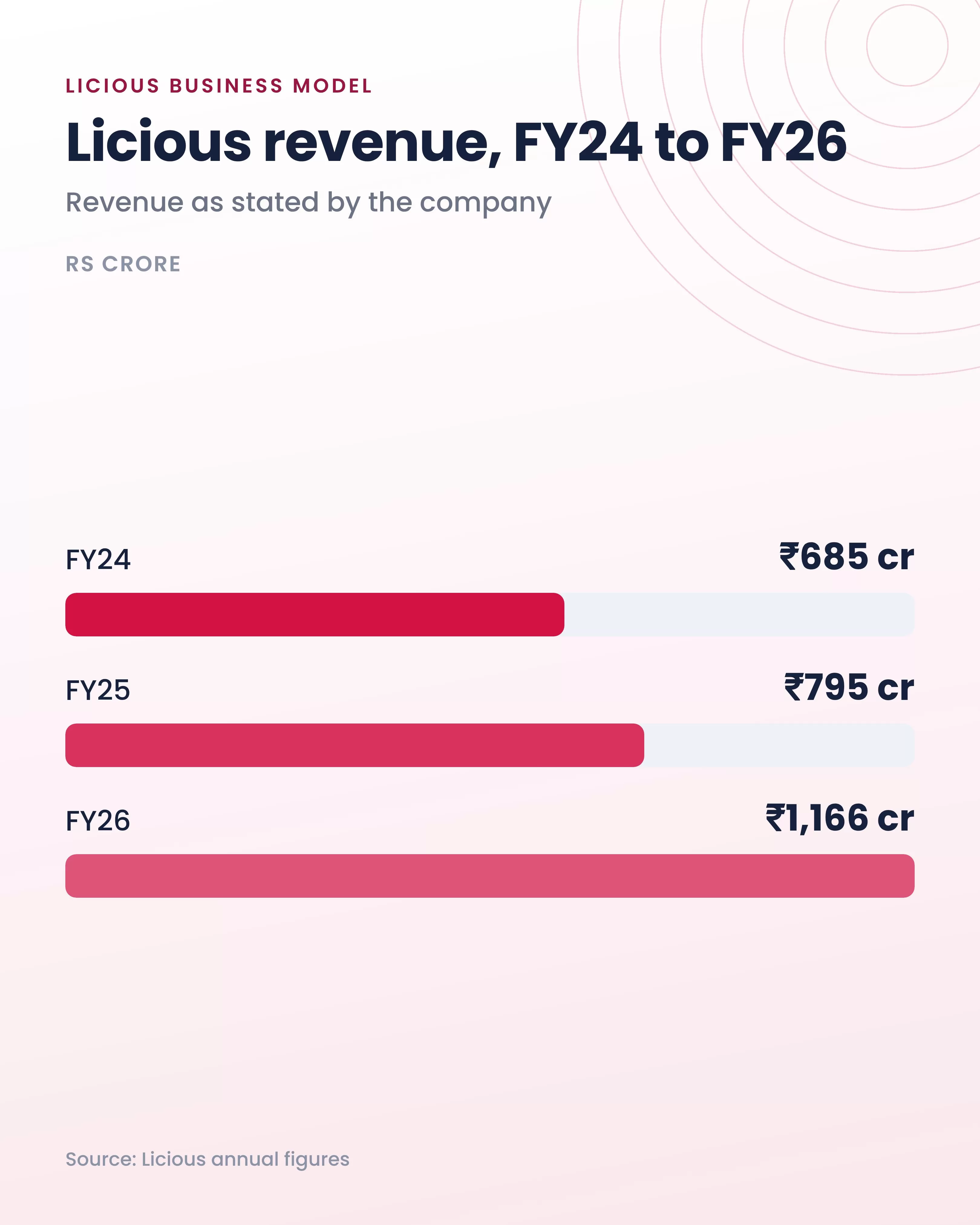
Licious reported revenue of ₹685 crore in FY24, ₹795 crore in FY25 and ₹1,166 crore in FY26. Its EBITDA loss was ₹187 crore in FY26.
Is Licious profitable
No. Licious reported an EBITDA loss in each of these years, and its net loss was ₹218.3 crore in FY25. EBITDA is earnings before interest, tax, depreciation and amortisation, so the net loss also includes those items.
Customers and repeat buying
Licious had over 1.5 million monthly active users in FY26. Repeat customers made up 94% of its business that year. In November 2025, its monthly revenue crossed ₹100 crore for the first time.
Licious's journey so far
| When | What happened |
|---|---|
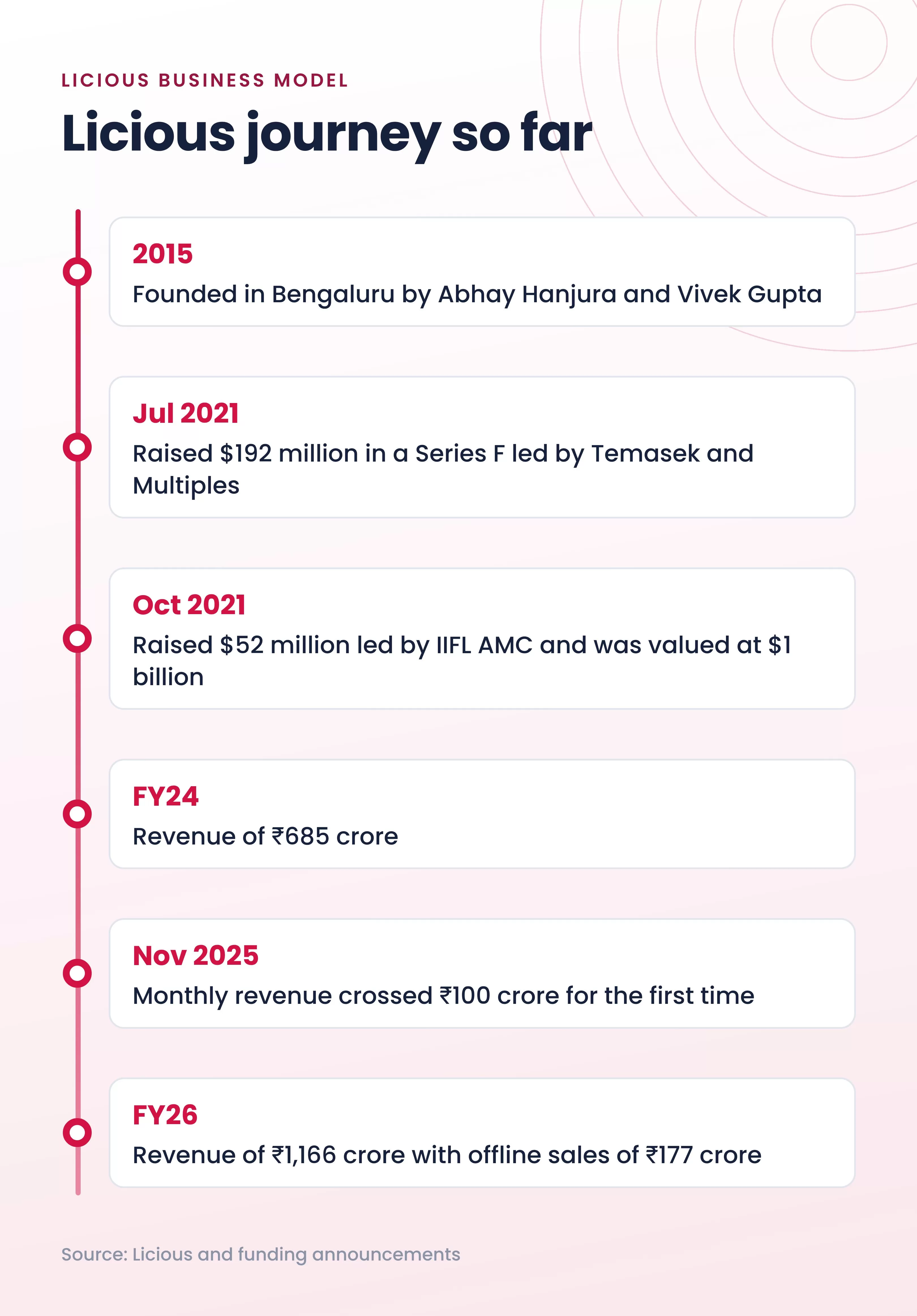
| 2015 | Founded in Bengaluru by Abhay Hanjura and Vivek Gupta |
| July 2021 | Raised $192 million in a Series F round led by Temasek and Multiples Private Equity |
| October 2021 | Raised $52 million in a Series G round led by IIFL AMC's Late Stage Tech Fund at a $1 billion valuation, becoming India's first D2C unicorn |
| FY24 | Revenue of ₹685 crore |
| November 2025 | Monthly revenue crossed ₹100 crore for the first time |
| FY26 | Revenue of ₹1,166 crore, with ₹177 crore from offline stores |
Licious owner and investors
Licious is run by Delightful Gourmet Pvt Ltd. Co-founders Abhay Hanjura and Vivek Gupta lead it, and its investors include Temasek, Multiples Private Equity, IIFL and 3one4 Capital.
Who Licious competes with
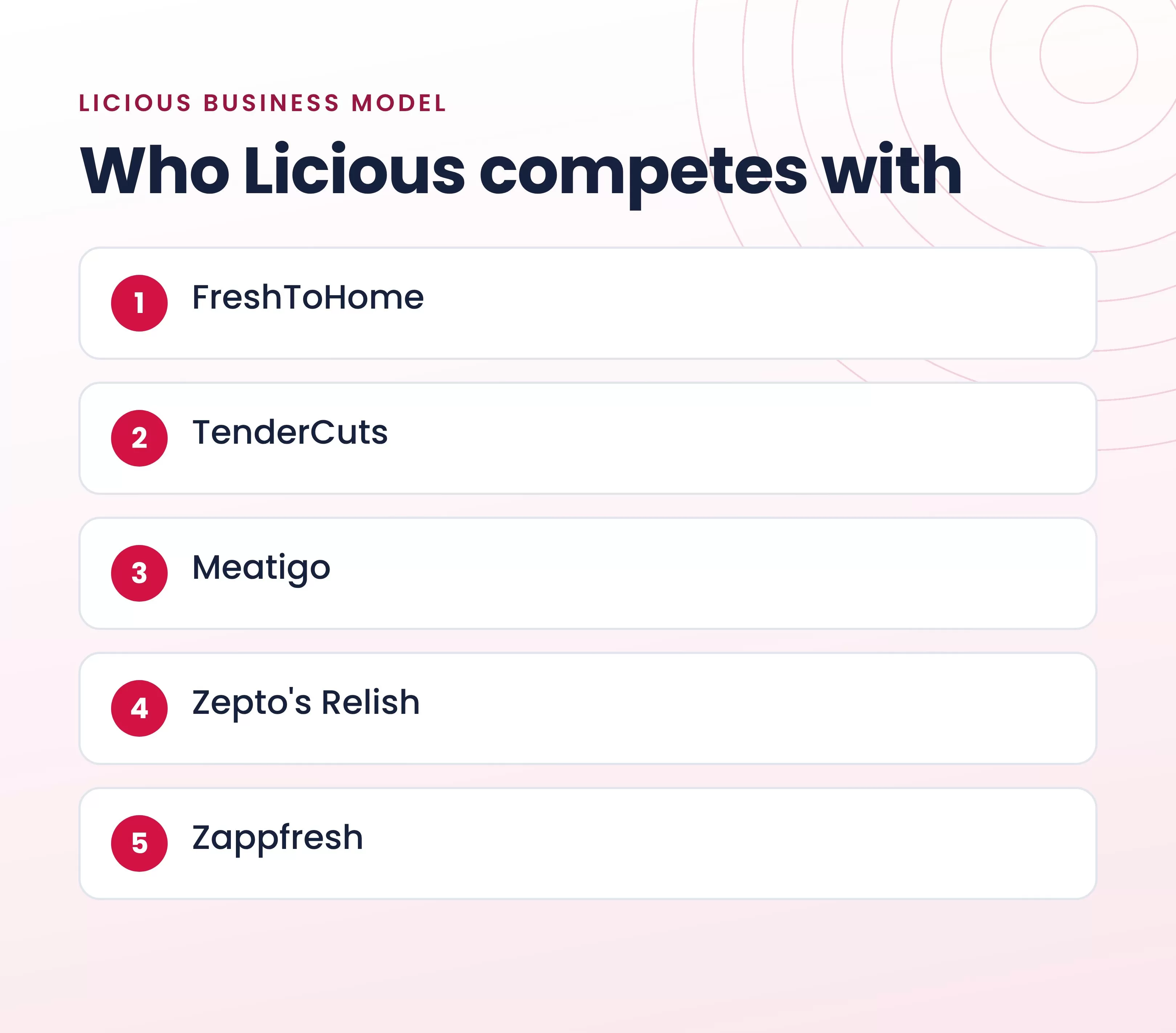
Licious competes with other online meat and seafood sellers, including FreshToHome, TenderCuts, Meatigo (which ITC agreed to acquire in 2025), Zepto's Relish and Zappfresh, as well as local meat shops.
Challenges Licious faces
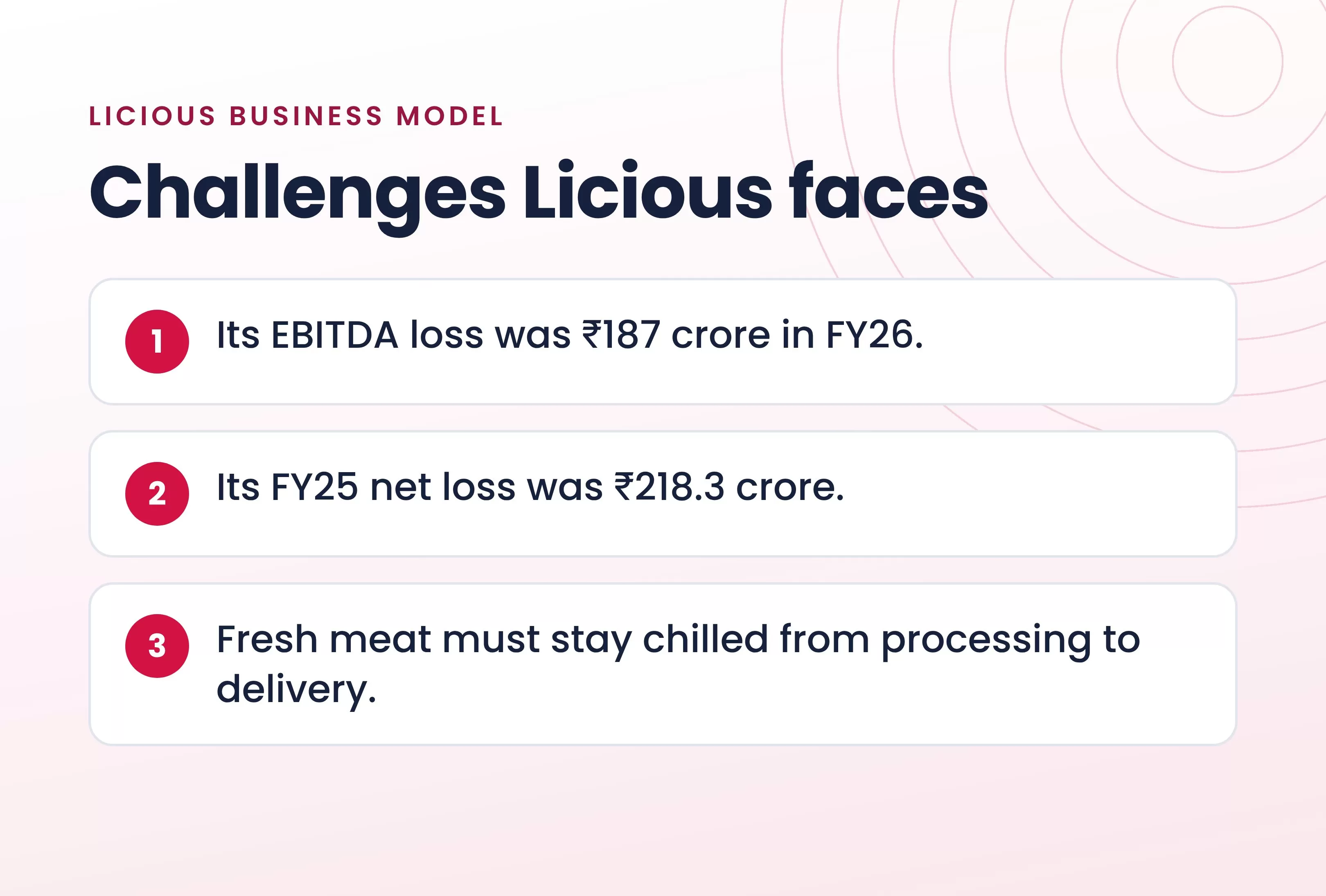
- Losses. Its EBITDA loss was ₹187 crore in FY26, and it spent on infrastructure and new stores that year.
- Fresh stock. Raw meat and seafood must stay chilled from processing to the doorstep, and Licious runs its own cold chain to do this.
Conclusion on the Licious business model
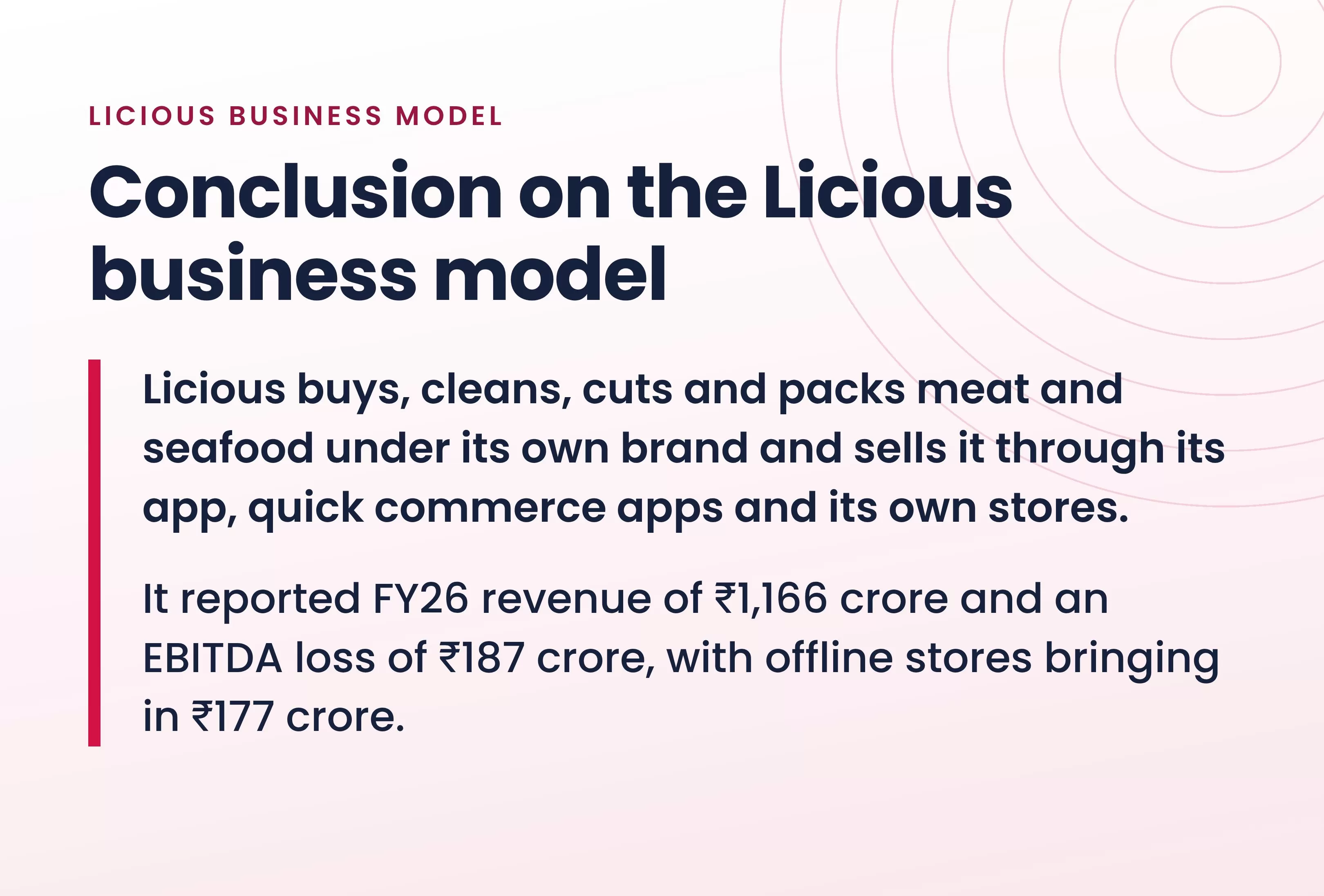
Licious buys, cleans, cuts and packs meat and seafood under its own brand and sells it through its app and website, quick commerce apps and its own stores. Its revenue is the price customers pay for these products.
It reported FY26 revenue of ₹1,166 crore and an EBITDA loss of ₹187 crore, with offline stores bringing in ₹177 crore.