The Smallcase Business Model of Stock Baskets Sold via Brokers
How Smallcase earns a fee on stock baskets bought through brokers.

Key Takeaways
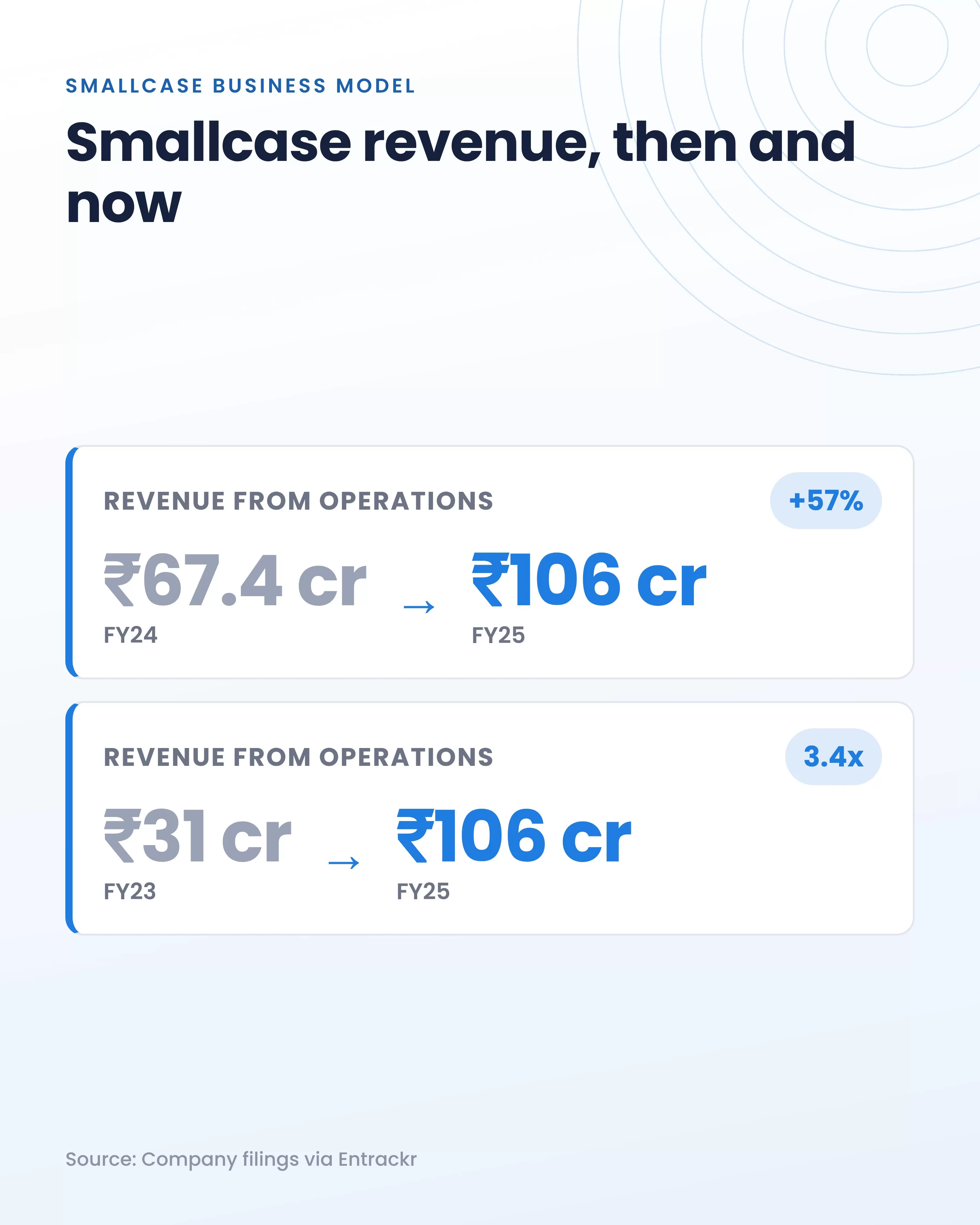
- FY25 revenue from operations rose 57% to ₹106 crore.
- Smallcase posted a net loss of ₹34 crore in FY25.
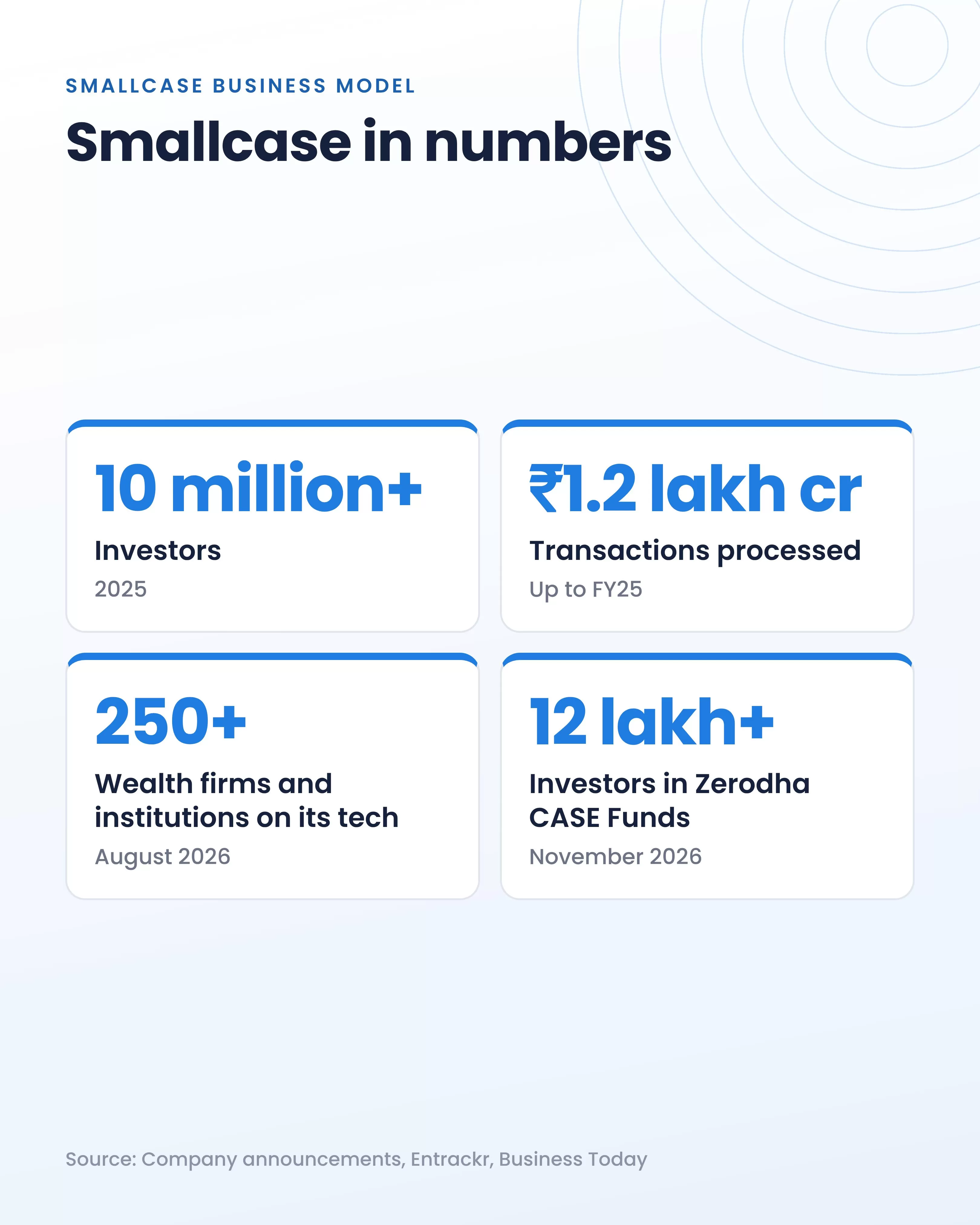
- Smallcase had more than 10 million investors in 2025.
- A buy order costs ₹100 plus GST, capped at 1.5% of its value.
Table of Contents 13 sections
- Smallcase at a glance
- What Smallcase does
- How does Smallcase make money
- Smallcase's Business Model Canvas
- Is Smallcase profitable
- Smallcase revenue model over three years
- Smallcase in numbers
- Smallcase's journey so far
- Who owns Smallcase
- Who Smallcase competes with
- Challenges Smallcase faces
- Conclusion on the Smallcase business model
- FAQs
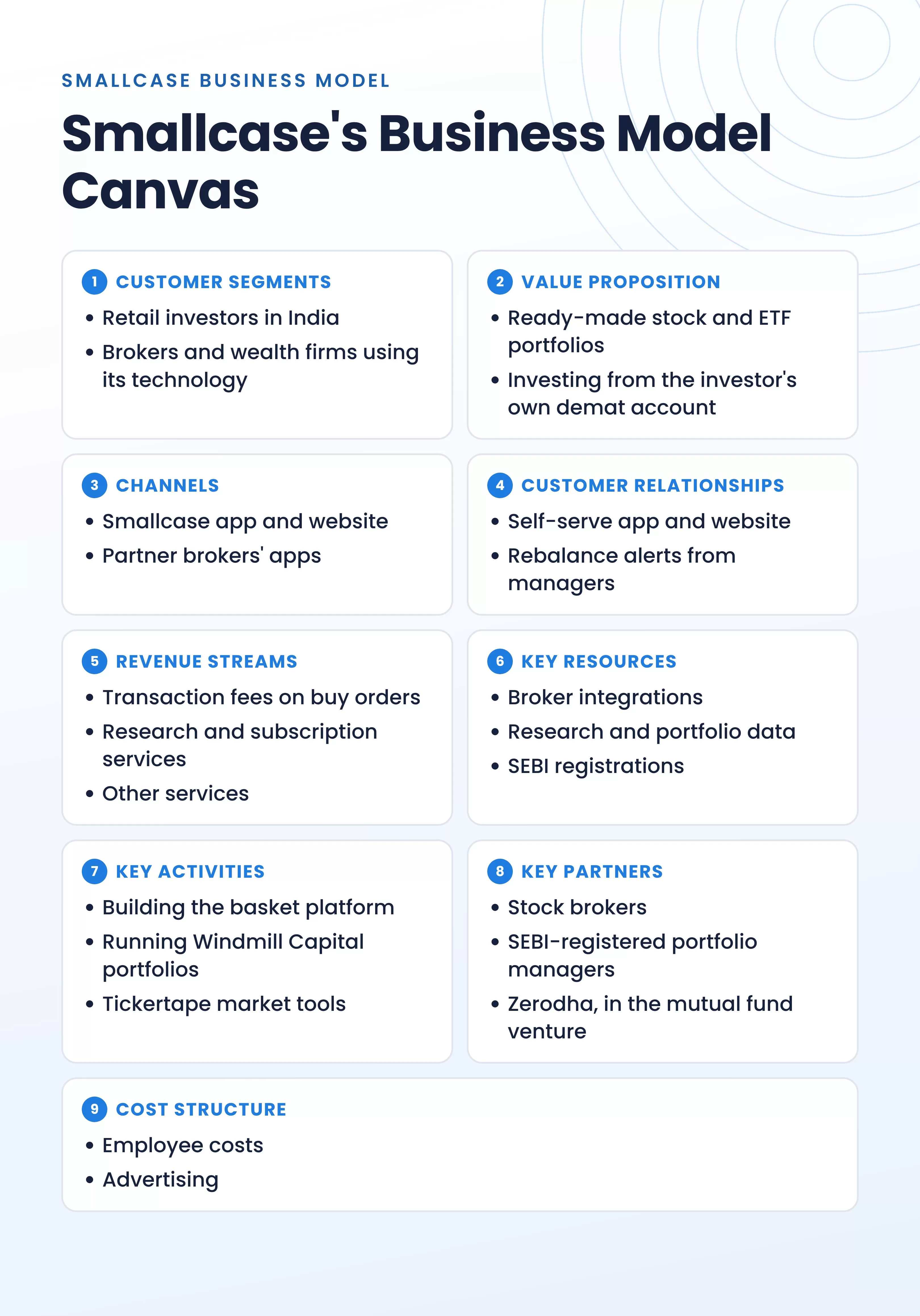
The Smallcase business model is built on ready-made baskets of stocks and ETFs, called smallcases, that investors buy through the broker account they already have. Smallcase earns mainly a fee on each buy order, which reaches it through the broker, plus income from research and other services.
In FY25 (April 2024 to March 2025), its revenue from operations rose 57% to ₹106 crore, from ₹67.4 crore in FY24. It posted a net loss of ₹34 crore for the year, and its EBITDA loss was ₹9 crore. In August 2026 the company behind it, Smallcase Technologies, took a new corporate name, CASE Platforms, while smallcase stays the brand for model portfolios.
Smallcase at a glance
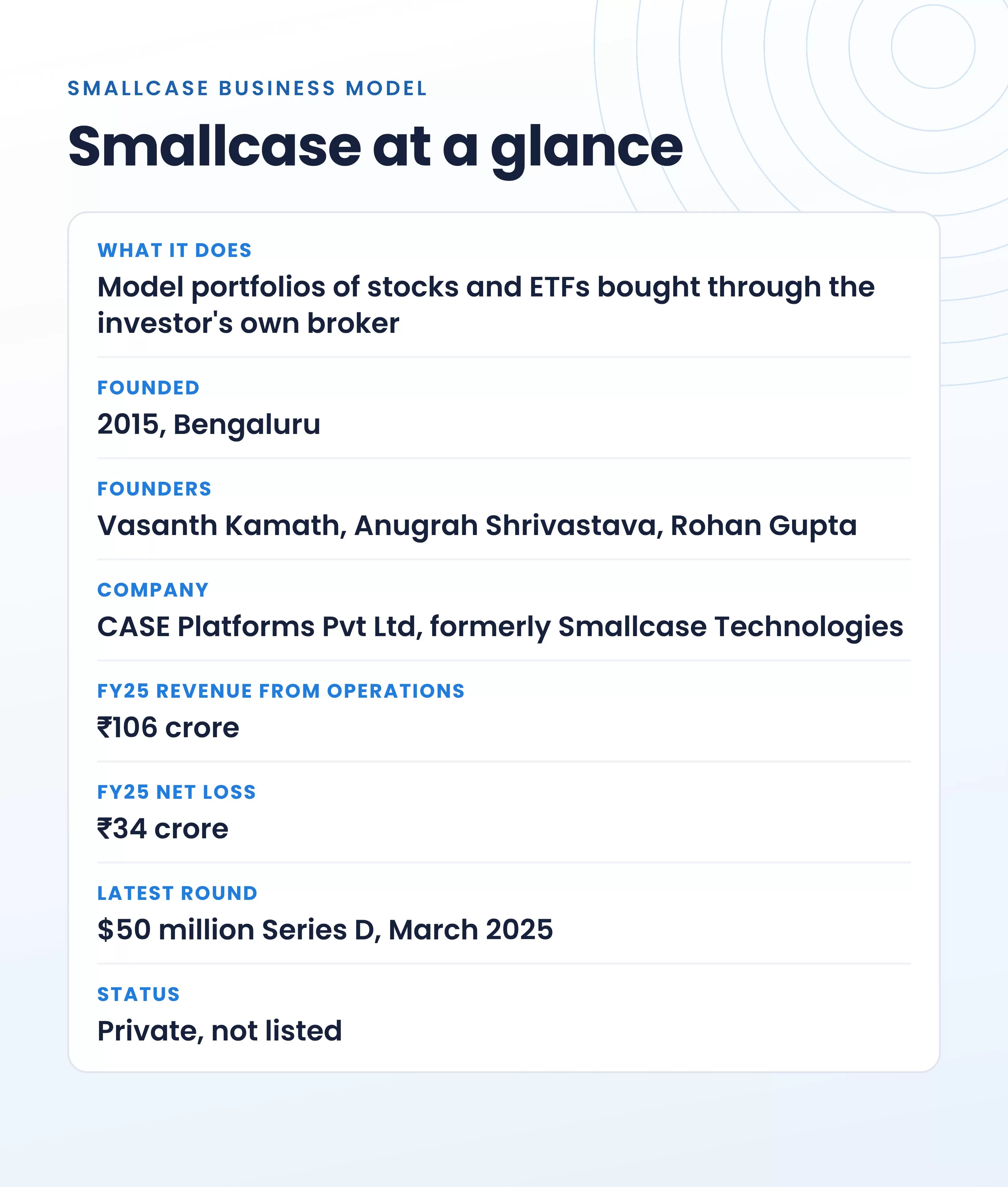
| Item | Detail |
|---|---|
| What it does | Model portfolios (baskets) of stocks and ETFs, bought through the investor's own broker |
| Founded | 2015, Bengaluru |
| Founders | Vasanth Kamath, Anugrah Shrivastava, Rohan Gupta |
| Company | CASE Platforms Private Limited, formerly Smallcase Technologies Private Limited |
| Revenue from operations (FY25) | ₹106 crore |
| Net loss (FY25) | ₹34 crore |
| Investors served | Over 10 million |
| Funding | About $120 million in total, latest a $50 million Series D in March 2025 |
| Listing status | Private, not listed |
What Smallcase does
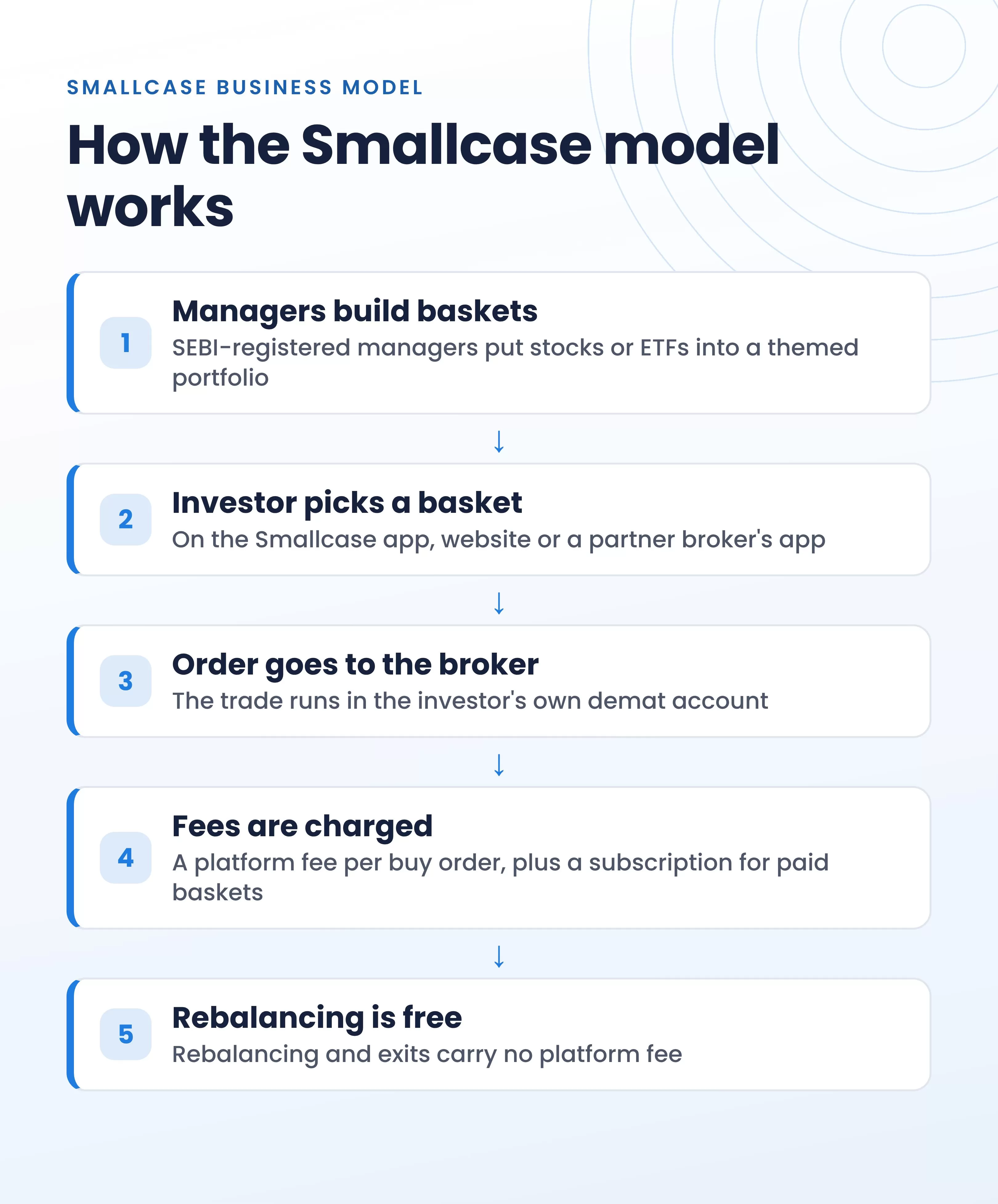
A smallcase is a basket of stocks or ETFs built around an idea, such as a theme, a sector or a strategy. SEBI-registered managers create and maintain these baskets. Some are free to follow and others charge a subscription that the manager sets.
Smallcase does not hold the investor's money or shares. The investor logs in with an existing broker account, picks a basket, and the order runs in that investor's own demat account. When a manager changes the basket, the investor gets a rebalance update and can review and place the changes.
Around the core product, the group now runs several businesses. They include Windmill Capital (portfolio management), Tickertape (market information and tools), creditcase (secured credit) and a mutual fund joint venture with Zerodha. In September 2026 it also launched baskets of US stocks and ETFs that start at $50.
How does Smallcase make money
Most of the money comes from a platform fee on buy orders. A new basket purchase or a lump-sum top-up costs ₹100 plus GST, capped at 1.5% of the order value. A SIP instalment costs ₹10 plus GST, with the same 1.5% cap. Rebalancing and exits carry no platform fee. The broker collects the fee from the investor's trading account.
Transaction fees charged through brokers are its main revenue stream. Research services and other services make up the rest of its revenue from operations.
Smallcase charges per order
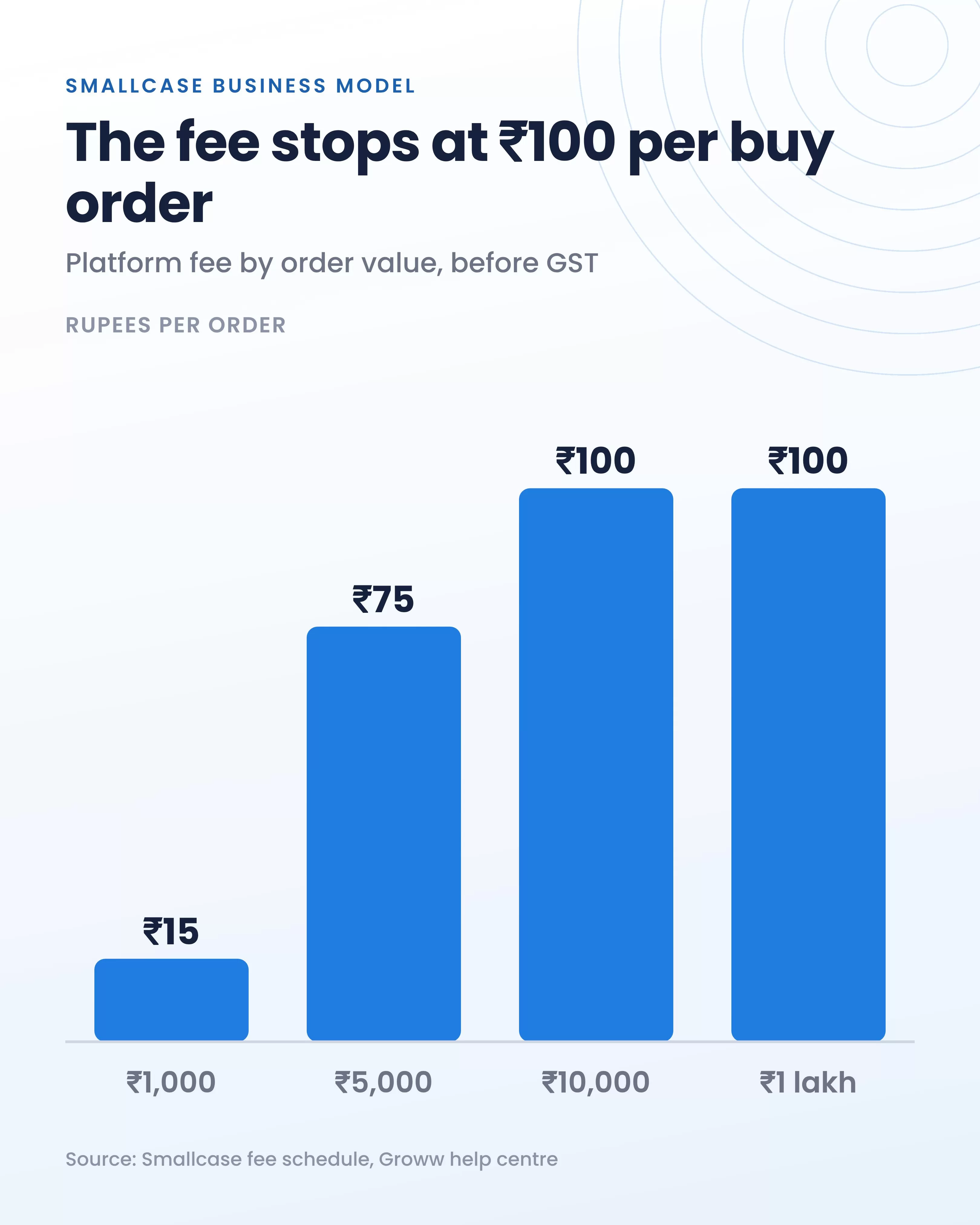
Because of the 1.5% cap, small orders pay less than ₹100. A ₹1,000 order pays ₹15 and a ₹5,000 order pays ₹75. From about ₹6,667 upwards the fee stays at ₹100, so a ₹10,000 order and a ₹1 lakh order pay the same ₹100. Subscription fees for paid baskets are separate: the investor pays them to the manager, and the manager sets the price and billing cycle.
Smallcase's Business Model Canvas
Is Smallcase profitable
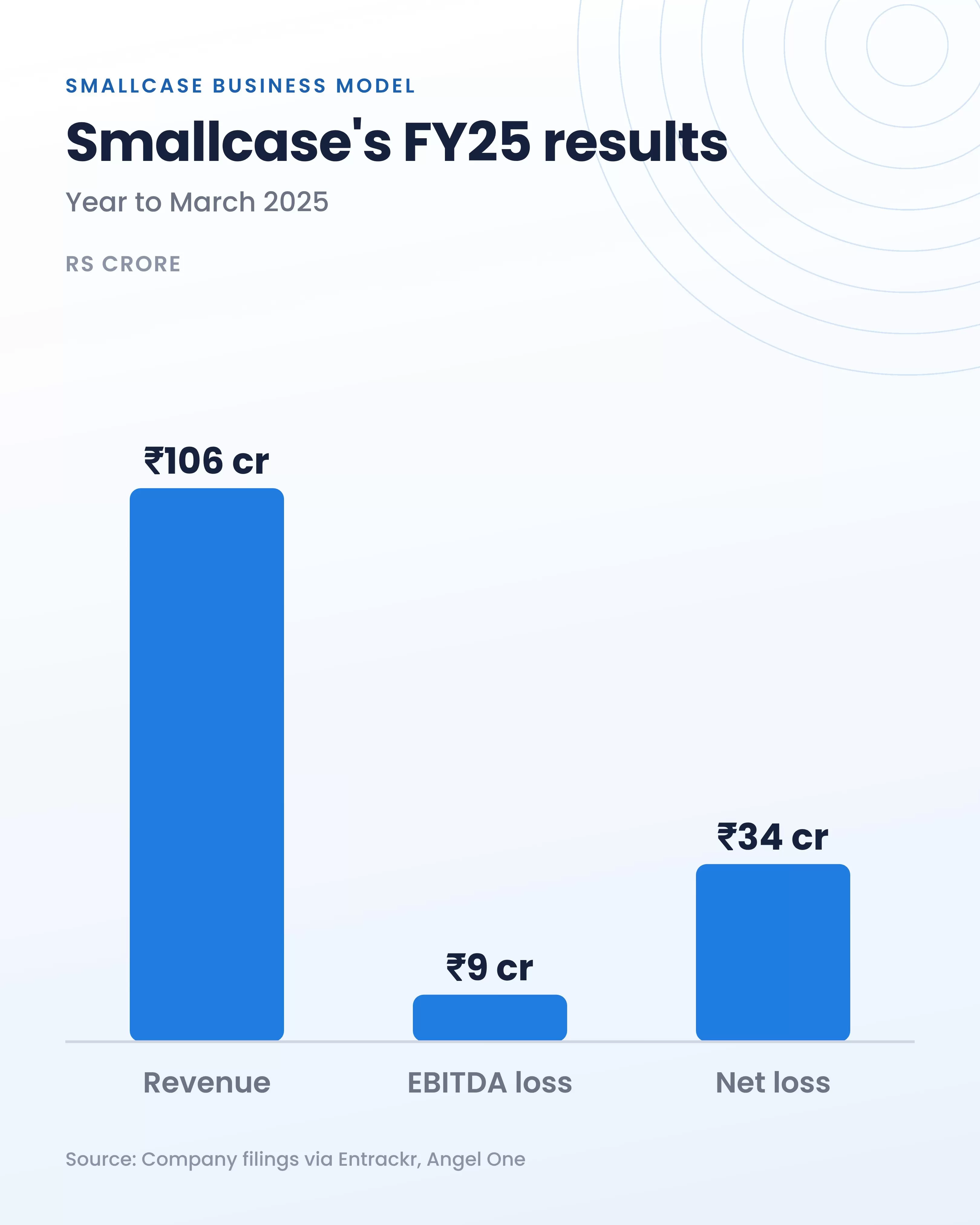
No. In FY25, its latest reported year, Smallcase had revenue from operations of ₹106 crore, an EBITDA loss of ₹9 crore and a net loss of ₹34 crore. EBITDA loss leaves out items such as depreciation, interest and tax, which the net loss includes.
| FY25 measure | Amount |
|---|---|
| Revenue from operations | ₹106 crore |
| EBITDA loss | ₹9 crore |
| Net loss | ₹34 crore |
Smallcase revenue model over three years
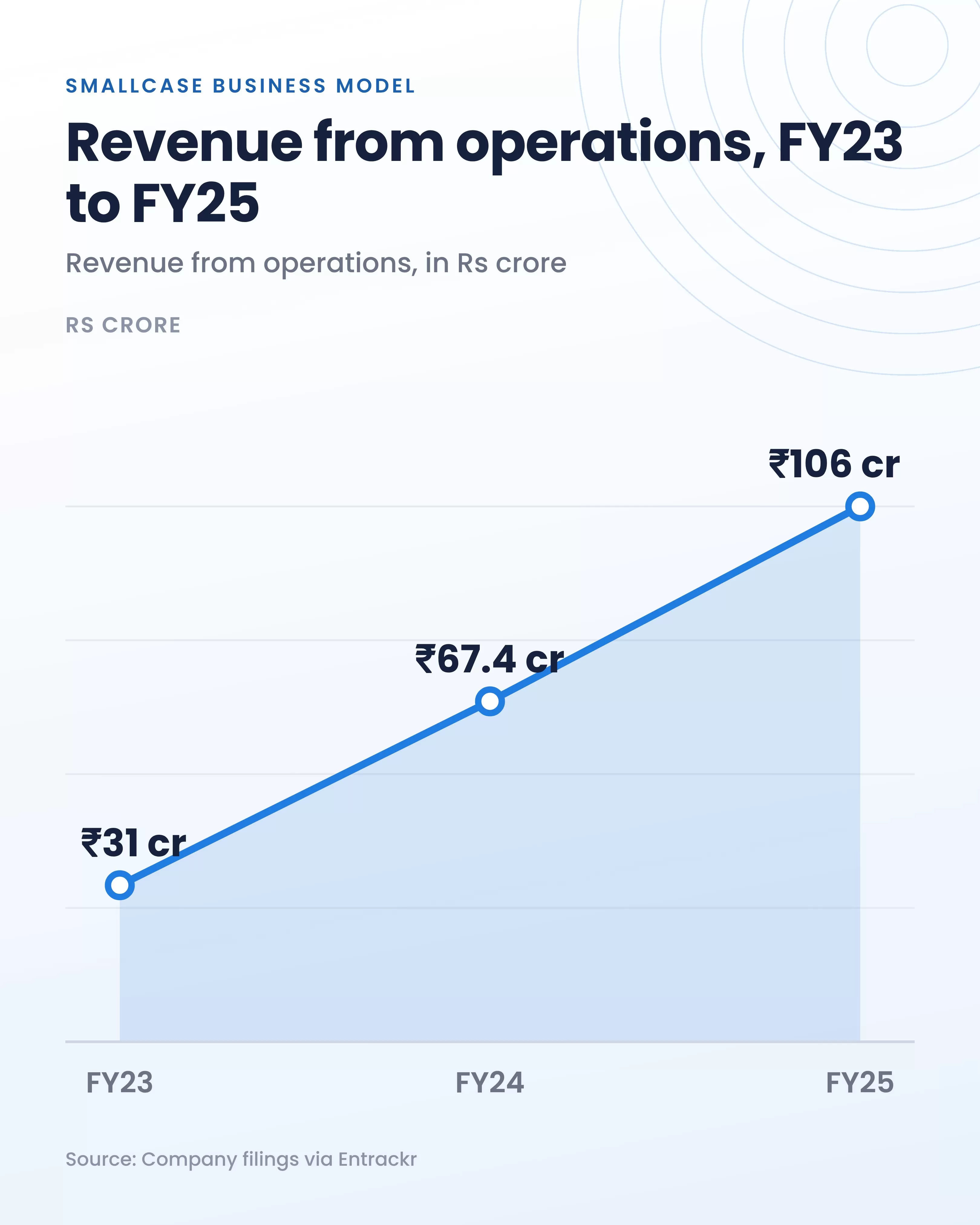
Revenue from operations was ₹31 crore in FY23. It then more than doubled to ₹67.4 crore in FY24 and reached ₹106 crore in FY25, about 3.4 times the FY23 level. Since the fee is charged per buy order and per SIP instalment, revenue rises with the number of orders investors place, not with the size of each order above the cap.
Smallcase in numbers
Smallcase has more than 10 million investors and had processed transactions worth ₹1.2 lakh crore by FY25. Its technology powers investment products for over 250 wealth firms and financial institutions. Its mutual fund joint venture with Zerodha, renamed Zerodha CASE Funds in November 2026, has more than 12 lakh investors.
Smallcase's journey so far
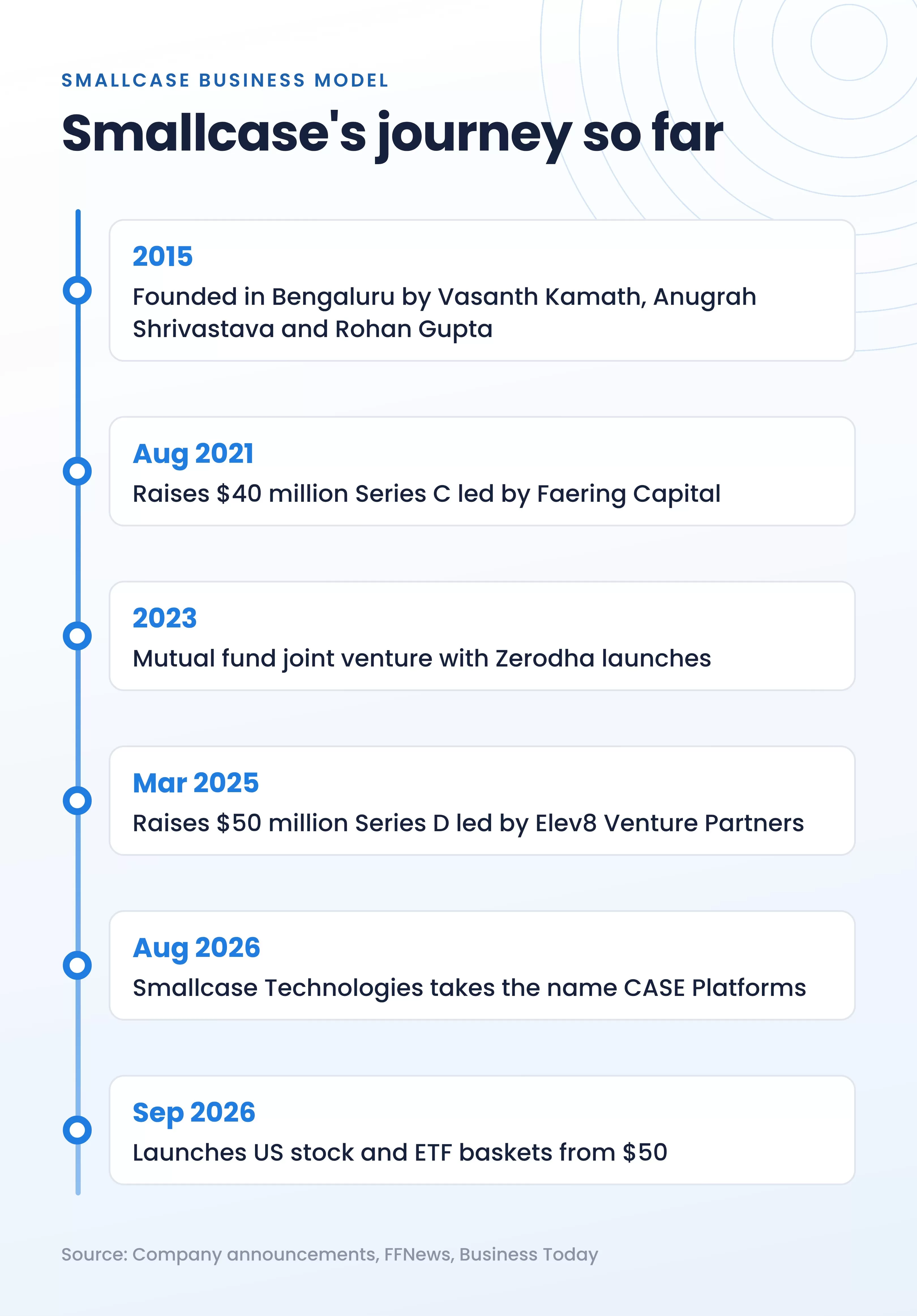
| When | What happened |
|---|---|
| 2015 | Founded in Bengaluru by Vasanth Kamath, Anugrah Shrivastava and Rohan Gupta |
| August 2021 | $40 million Series C led by Faering Capital, with Amazon and Premji Invest joining |
| 2023 | Mutual fund joint venture with Zerodha launches |
| March 2025 | $50 million Series D led by Elev8 Venture Partners |
| August 2026 | Smallcase Technologies introduces CASE Platforms as its new corporate identity |
| September 2026 | US stock and ETF baskets launch, starting at $50 |
Who owns Smallcase
Smallcase is a private company run by CASE Platforms Private Limited. Its founders started it in 2015, and its investors include Peak XV, Faering Capital and Blume Ventures. In all, it has raised about $120 million.
Who Smallcase competes with
Smallcase competes for investors' money with wealth and investing apps such as INDmoney.
Challenges Smallcase faces
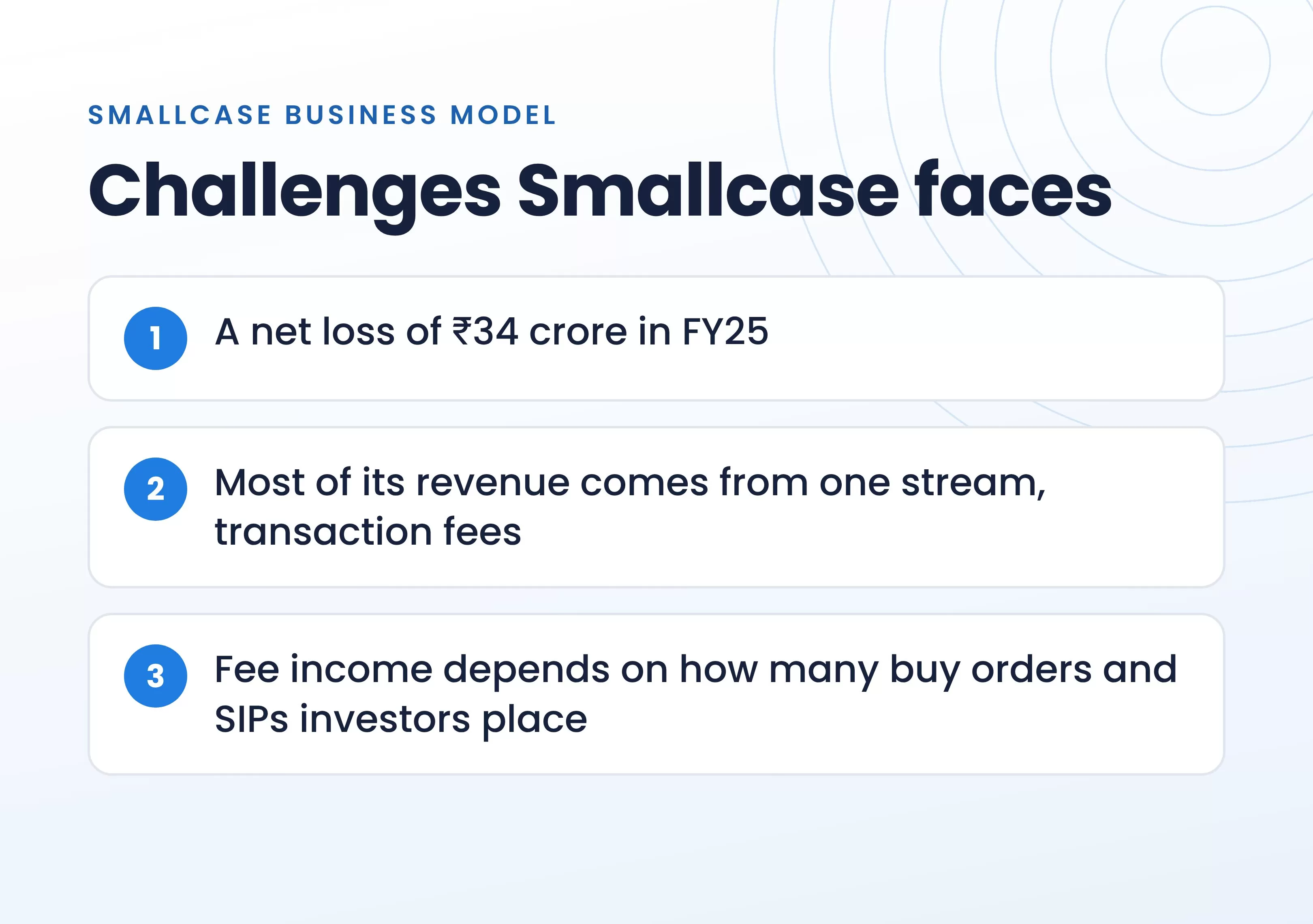
The company is still loss-making, with a net loss of ₹34 crore in FY25. Most of its revenue comes from one stream, transaction fees, so income depends on how many buy orders and SIPs investors place in a given year.
Conclusion on the Smallcase business model
Smallcase sells ready-made baskets of stocks and ETFs that investors buy through their own broker account. SEBI-registered managers build the baskets, brokers run the trades, and Smallcase charges a fee on each buy order, with research and other services adding the rest.
FY25 revenue from operations was ₹106 crore with a net loss of ₹34 crore. The group now operates as CASE Platforms, with smallcase as its model portfolio brand alongside Windmill Capital, Tickertape, creditcase and Zerodha CASE Funds.