Shiprocket Business Model of Shipping Software for Online Sellers
How Shiprocket earns from shipping, fulfilment and seller tools.

Key Takeaways
- FY26 revenue from operations rose 24% to ₹2,024 crore.
- Shiprocket posted a net loss of ₹79 crore in FY26.
- Core shipping made up 73.4% of FY26 revenue at ₹1,485 crore.
- Q2 FY27 revenue rose 35% to ₹673.6 crore, with a ₹0.6 crore profit.
Table of Contents 11 sections
- Shiprocket at a glance
- How does Shiprocket work
- How the Shiprocket business model makes money
- Shiprocket's Business Model Canvas
- Shiprocket revenue and loss over three years
- Shiprocket in numbers in the latest quarter
- Shiprocket's journey so far
- Who Shiprocket competes with
- Challenges Shiprocket faces
- Conclusion on the Shiprocket business model
- FAQs
The Shiprocket business model is built on software that lets online sellers book parcels with many courier companies from one dashboard, and on newer tools for checkout, marketing, fulfilment and cross-border shipping. Sellers pay Shiprocket for each service, and Shiprocket pays the courier its delivery fee.
In FY26 (April 2025 to March 2026), Shiprocket earned ₹2,024 crore in revenue from operations, up 24% from ₹1,632 crore, and posted a net loss of ₹79 crore. In the July to September 2026 quarter (Q2 FY27), revenue rose 35% to ₹673.6 crore and the company reported a profit after tax of ₹0.6 crore.
Shiprocket at a glance
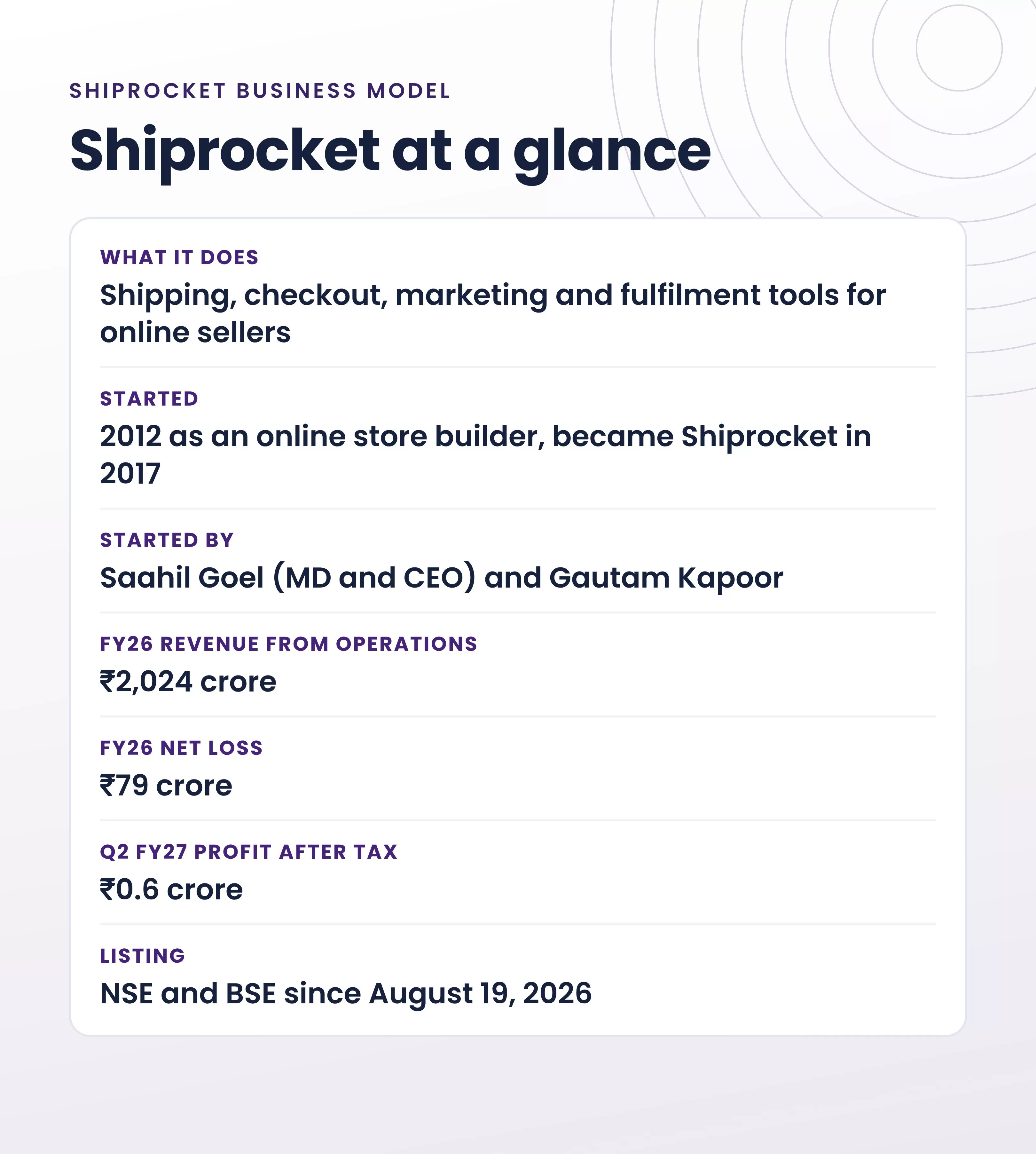
| Item | Details |
|---|---|
| What it does | Shipping, checkout, marketing and fulfilment tools for online sellers |
| Started | 2012 as an online store builder, became Shiprocket in 2017 |
| Started by | Saahil Goel (Managing Director and CEO) and Gautam Kapoor |
| Headquarters | Gurugram |
| FY26 revenue from operations | ₹2,024 crore |
| FY26 net loss | ₹79 crore |
| Q2 FY27 profit after tax | ₹0.6 crore |
| Active merchants | 236,116 (trailing twelve months to September 2026) |
| Listing | NSE and BSE since August 19, 2026, IPO price ₹97 a share |
How does Shiprocket work
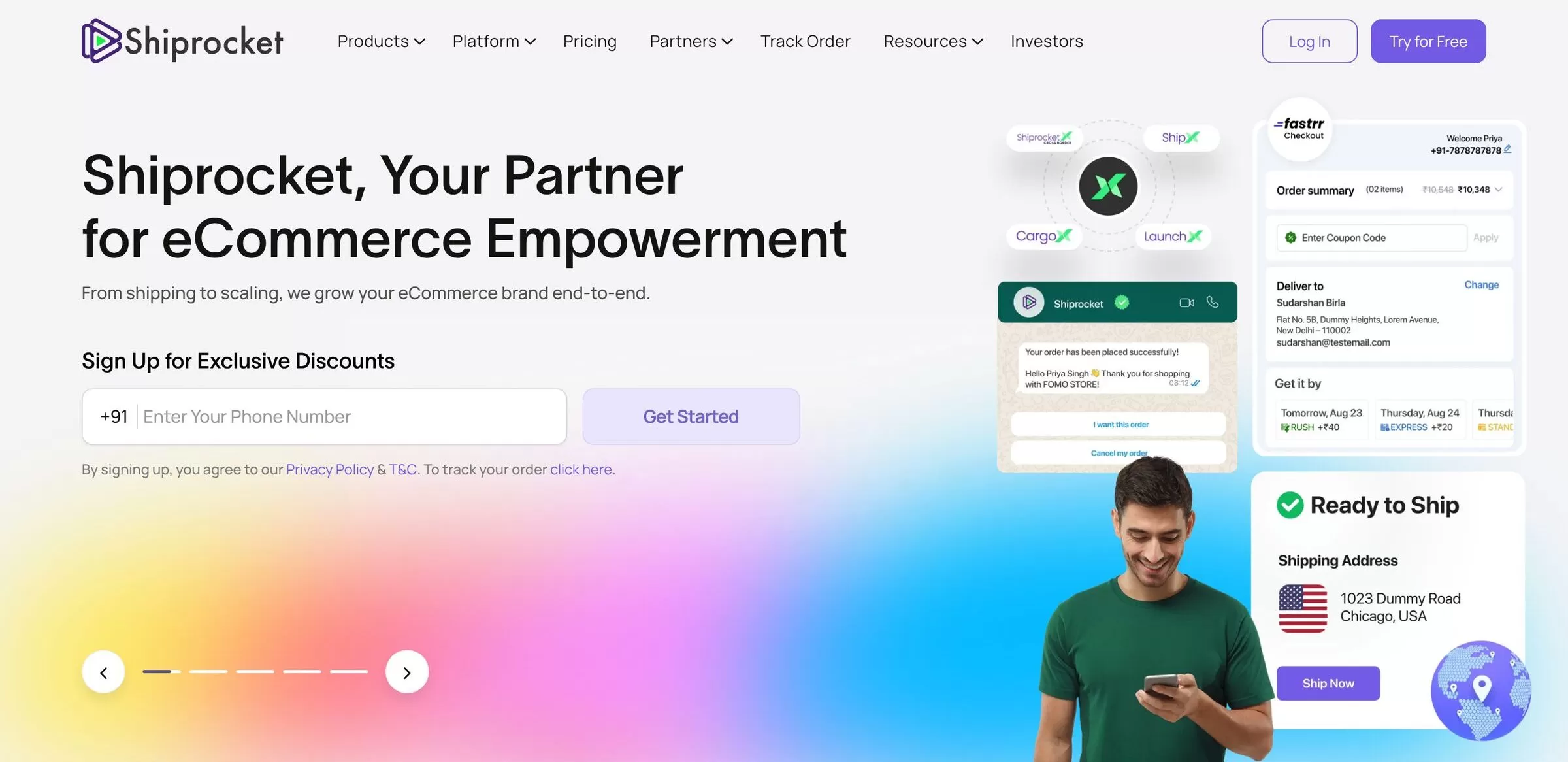
A small brand that sells through its own website, Instagram or WhatsApp links its store to Shiprocket. Each order then appears on the Shiprocket dashboard. The software suggests a courier partner for each parcel based on cost and delivery performance, and the seller prints a label and books a pickup.
Shiprocket does not own the delivery fleet. Courier partners carry the parcels, which can reach more than 19,000 pincodes in India. Shiprocket bills the seller for the shipment and pays the courier, so the gap between the two, plus add-on services, is how the core business earns.
How the Shiprocket business model makes money
Shiprocket reports two segments. The Core Business is the domestic shipping platform and shipping apps. The Emerging Business covers cargo and fulfilment (Omnichannel), cross-border shipping, and ads and marketing tools (Martech, now sold under the Fastrr name).
| Business line | FY26 revenue | FY25 revenue |
|---|---|---|
| Core shipping business | ₹1,485 crore | ₹1,306 crore |
| Cargo and fulfilment (Omnichannel) | ₹303 crore | ₹172 crore |
| Cross-border | ₹139 crore | ₹122 crore |
| Ads and marketing (Martech) | ₹84 crore | ₹27 crore |
| Others | ₹13 crore | ₹5 crore |
| Total revenue from operations | ₹2,024 crore | ₹1,632 crore |
The core shipping business made up 73.4% of FY26 revenue. The Emerging Business grew 65.2% to ₹539 crore and made up 26.6% of revenue.
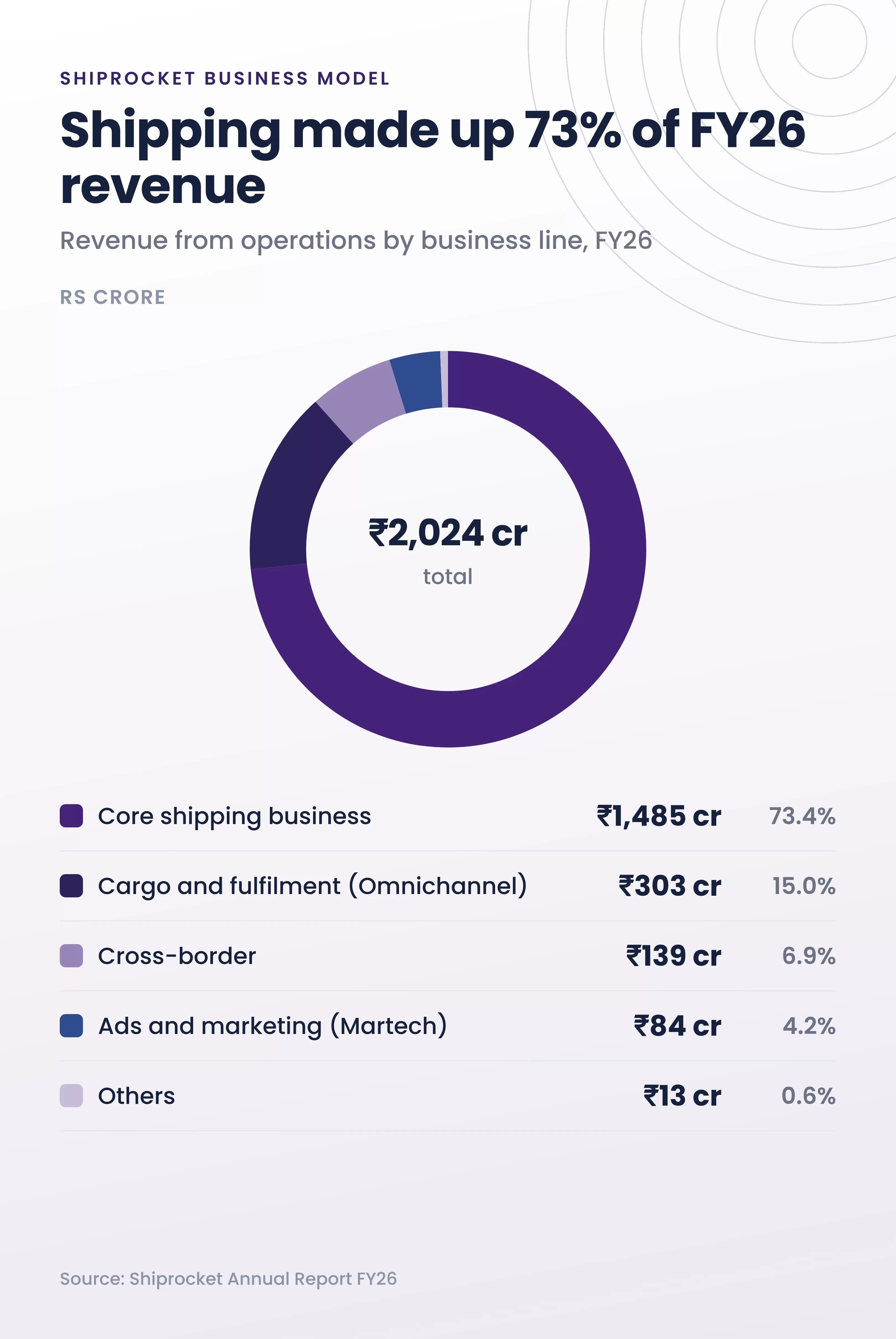
Shiprocket revenue model in the newer business lines
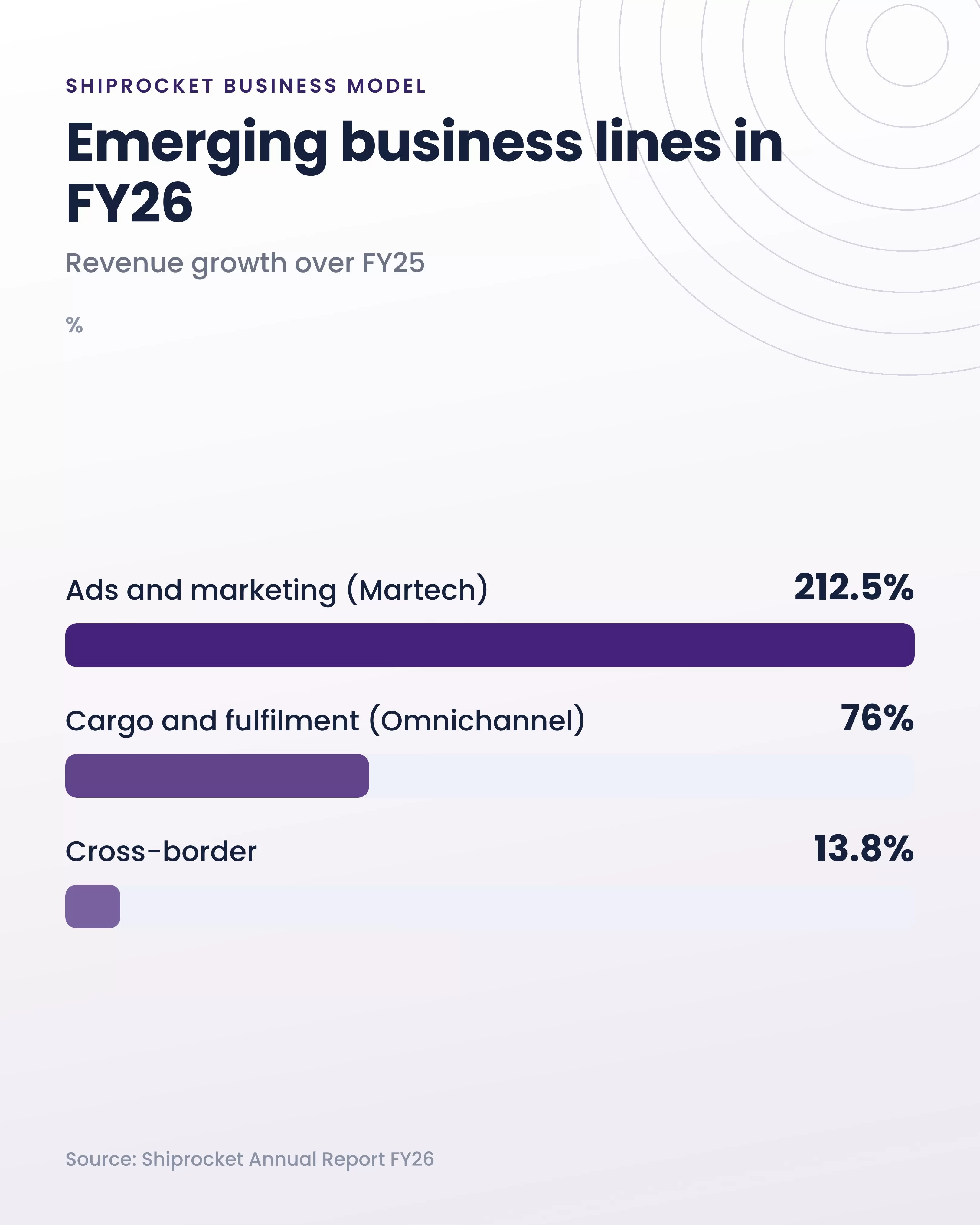
Within the Emerging Business, ads and marketing revenue grew 212.5% in FY26, cargo and fulfilment grew 76.0% and cross-border grew 13.8%. Fulfilment includes stocking quick commerce dark stores for brands through booked delivery slots. Martech includes Fastrr Checkout, a one-click checkout for sellers' websites, and Shiprocket Ads.
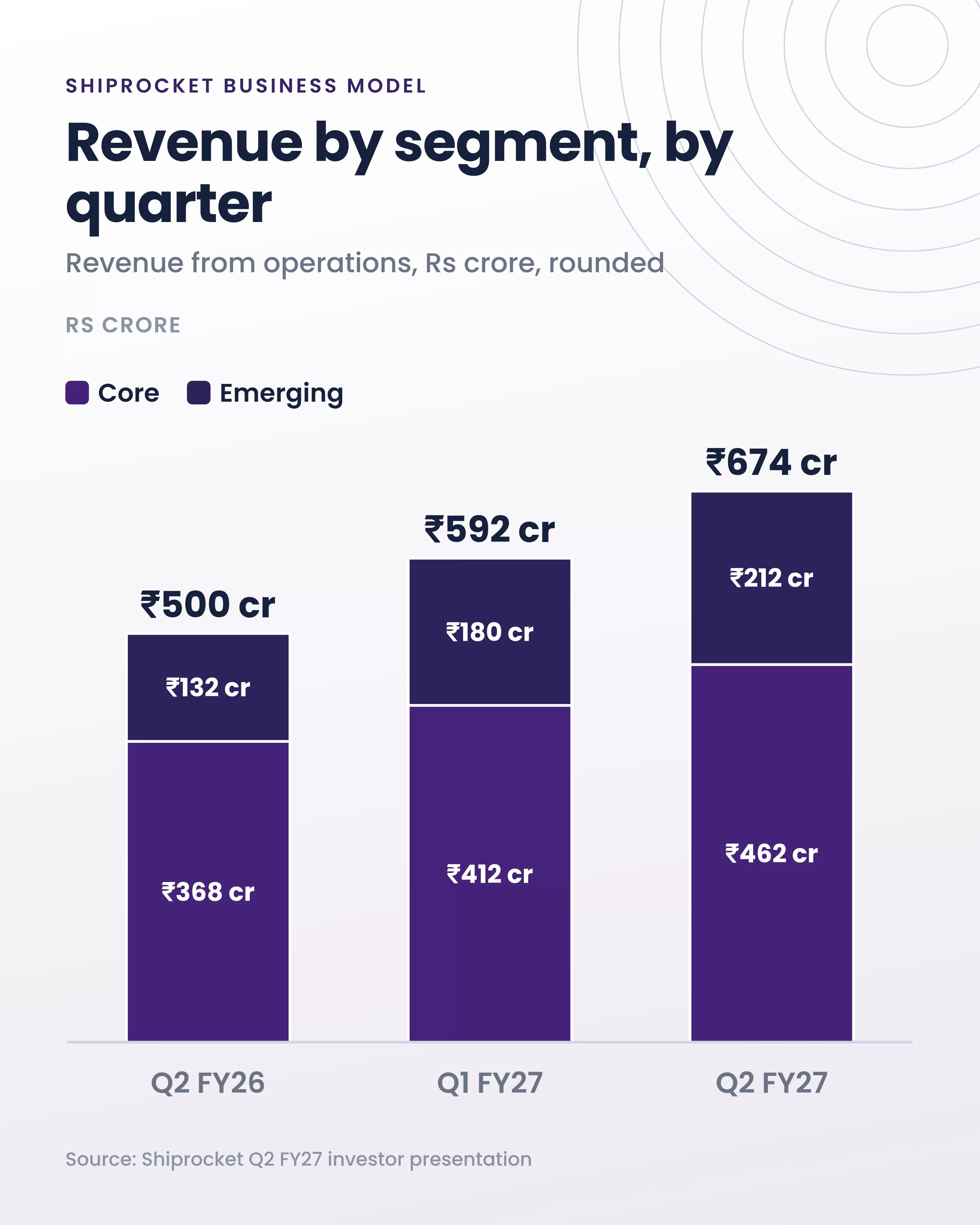
In Q2 FY27, the Core Business earned ₹461.5 crore, up 25%, and the Emerging Business earned ₹212.2 crore, up 61%. The Emerging Business now makes up 31% of quarterly revenue, against 26% a year earlier.
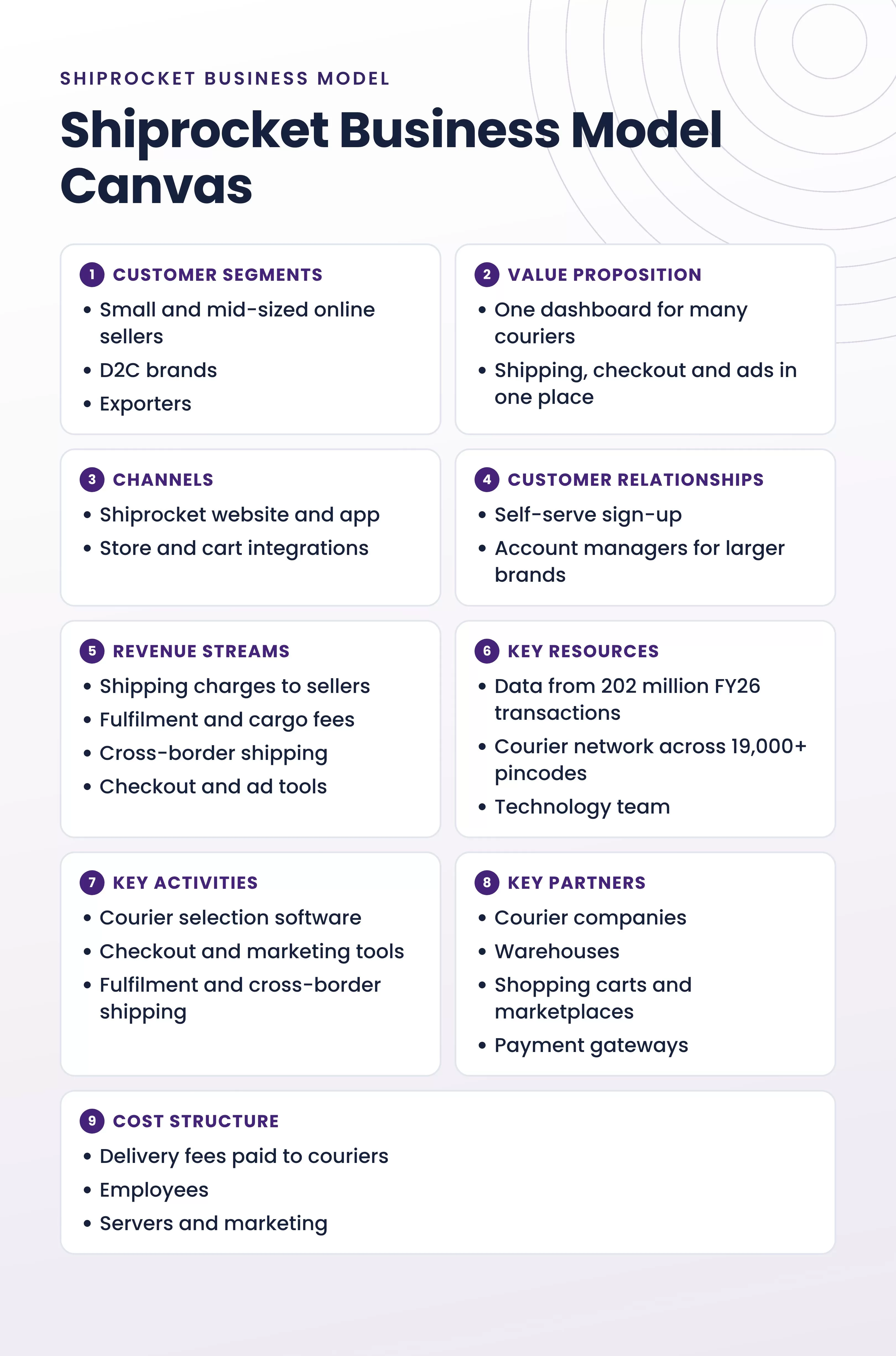
Shiprocket's Business Model Canvas
Shiprocket revenue and loss over three years
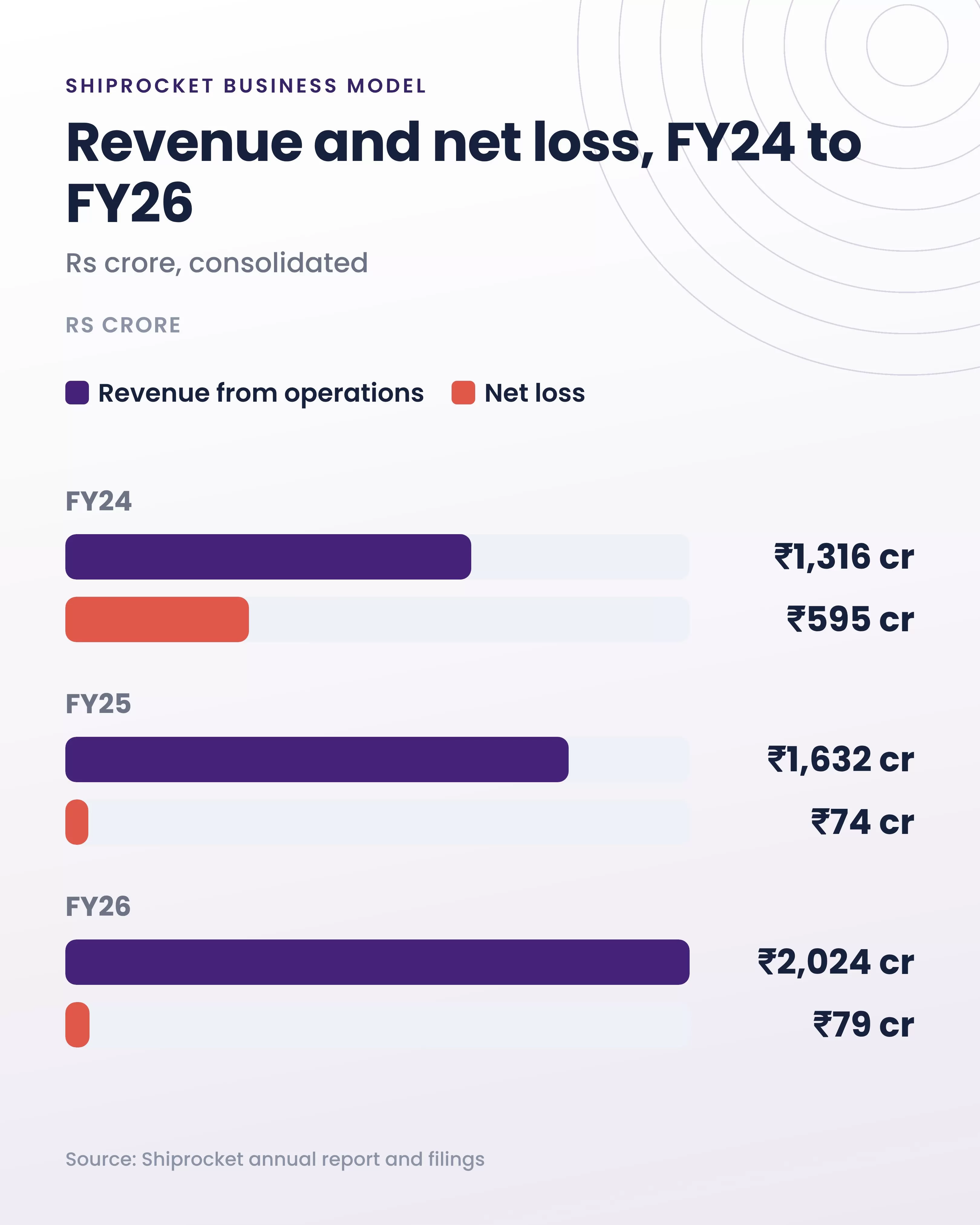
Revenue from operations rose from ₹1,316 crore in FY24 to ₹1,632 crore in FY25 and ₹2,024 crore in FY26. The net loss was ₹595 crore in FY24, which included one-time restructuring costs, then ₹74 crore in FY25 and ₹79 crore in FY26. The FY26 loss included ₹112 crore of share-based payment (ESOP) expense.
Shiprocket in numbers in the latest quarter
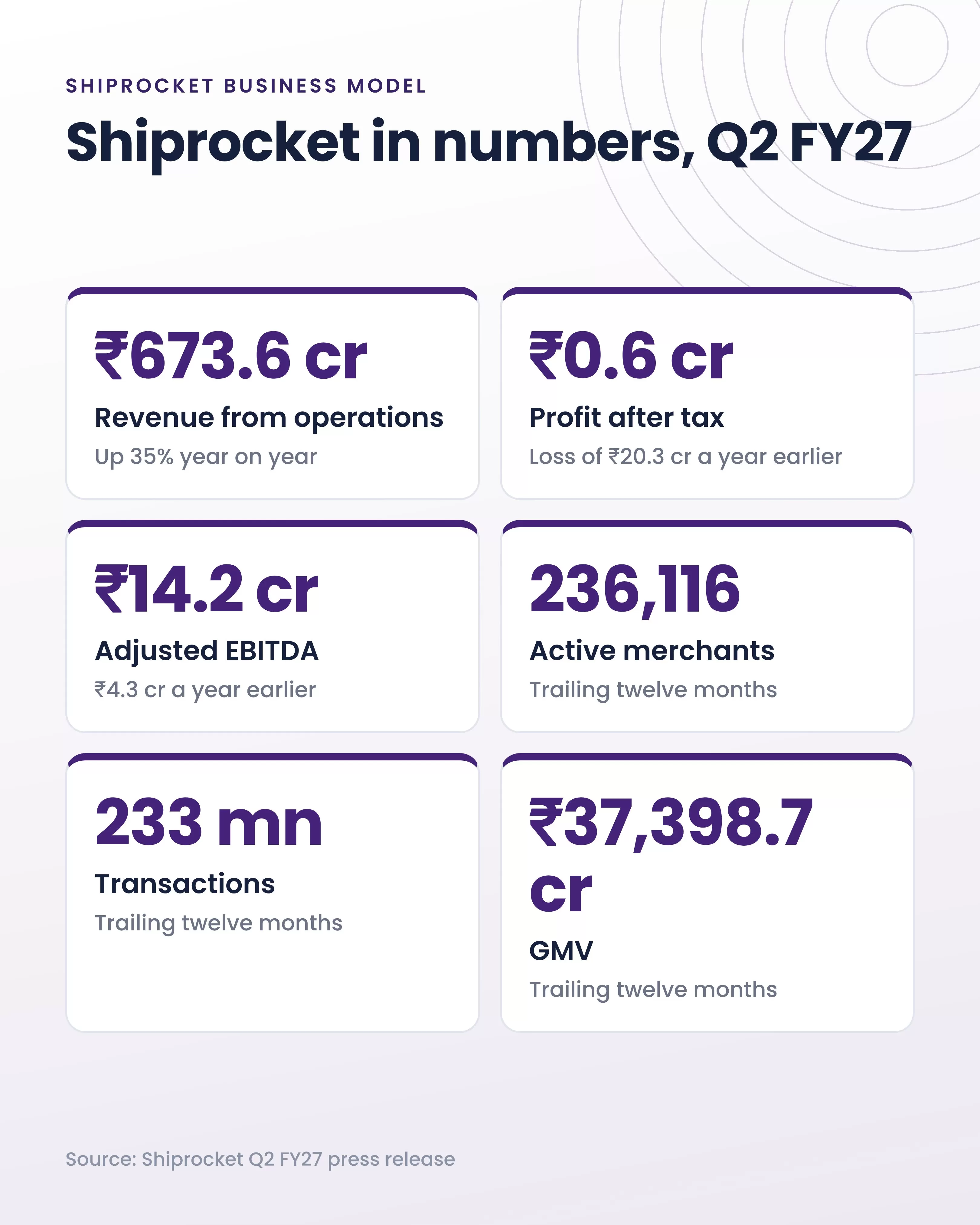
In Q2 FY27, Shiprocket reported adjusted EBITDA of ₹14.2 crore, against ₹4.3 crore a year earlier, and a profit after tax of ₹0.6 crore, against a loss of ₹20.3 crore. The Core Business had an adjusted EBITDA margin of 12.8%. Over the twelve months to September 2026, the platform handled 233 million transactions worth ₹37,398.7 crore in gross merchandise value (GMV) for 236,116 active merchants.
Shiprocket's journey so far
| When | What happened |
|---|---|
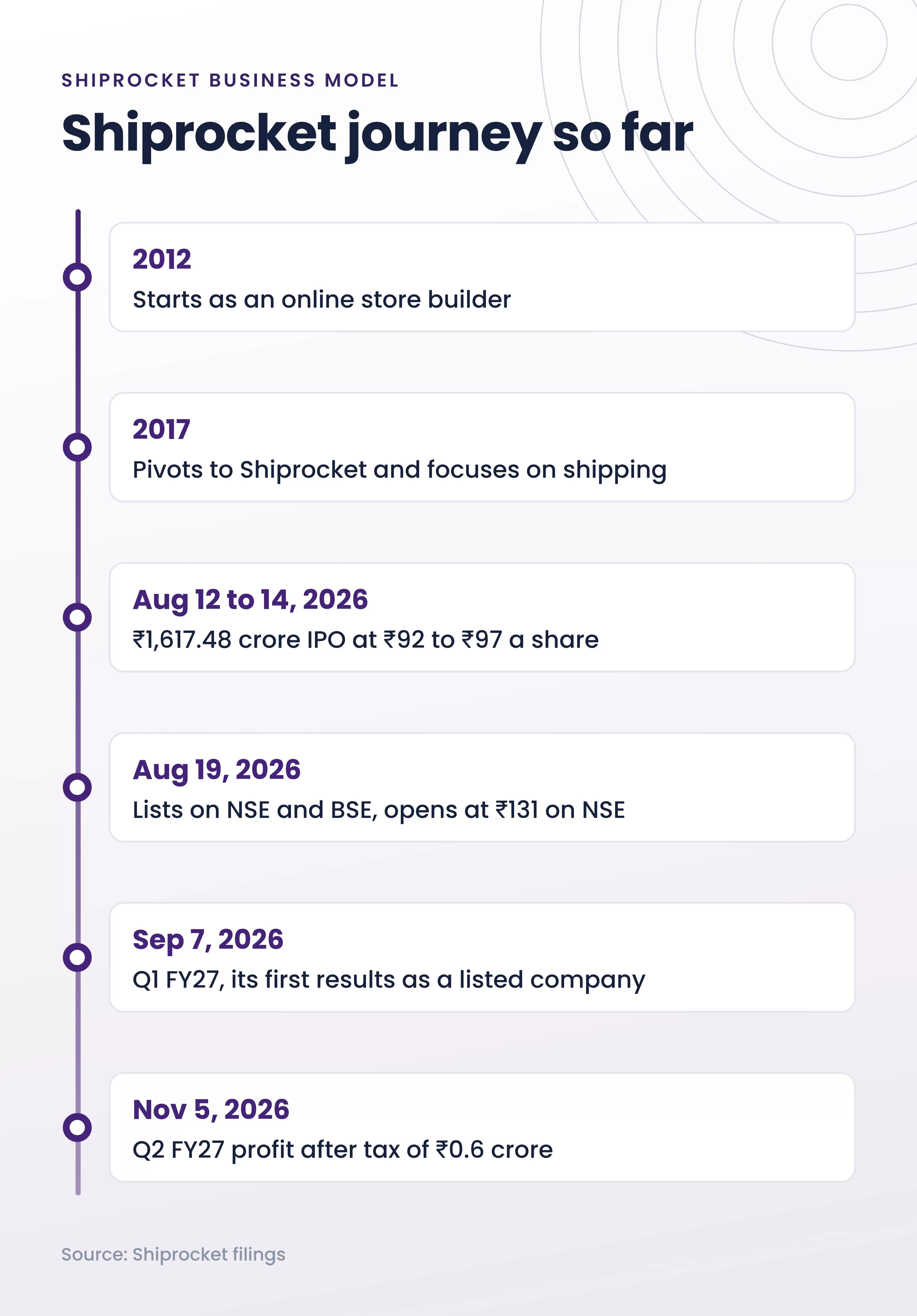
| 2012 | Saahil Goel and Gautam Kapoor start an online store builder |
| 2017 | The company pivots to Shiprocket and focuses on shipping |
| August 12 to 14, 2026 | ₹1,617.48 crore IPO at ₹92 to ₹97 a share, with a ₹885.50 crore fresh issue and a ₹731.98 crore offer for sale |
| August 19, 2026 | Shares list on NSE and BSE, opening at ₹131 on NSE, 35.05% above the issue price |
| September 7, 2026 | Q1 FY27 results, its first as a listed company |
| November 5, 2026 | Q2 FY27 results with a profit after tax of ₹0.6 crore |
Who Shiprocket competes with
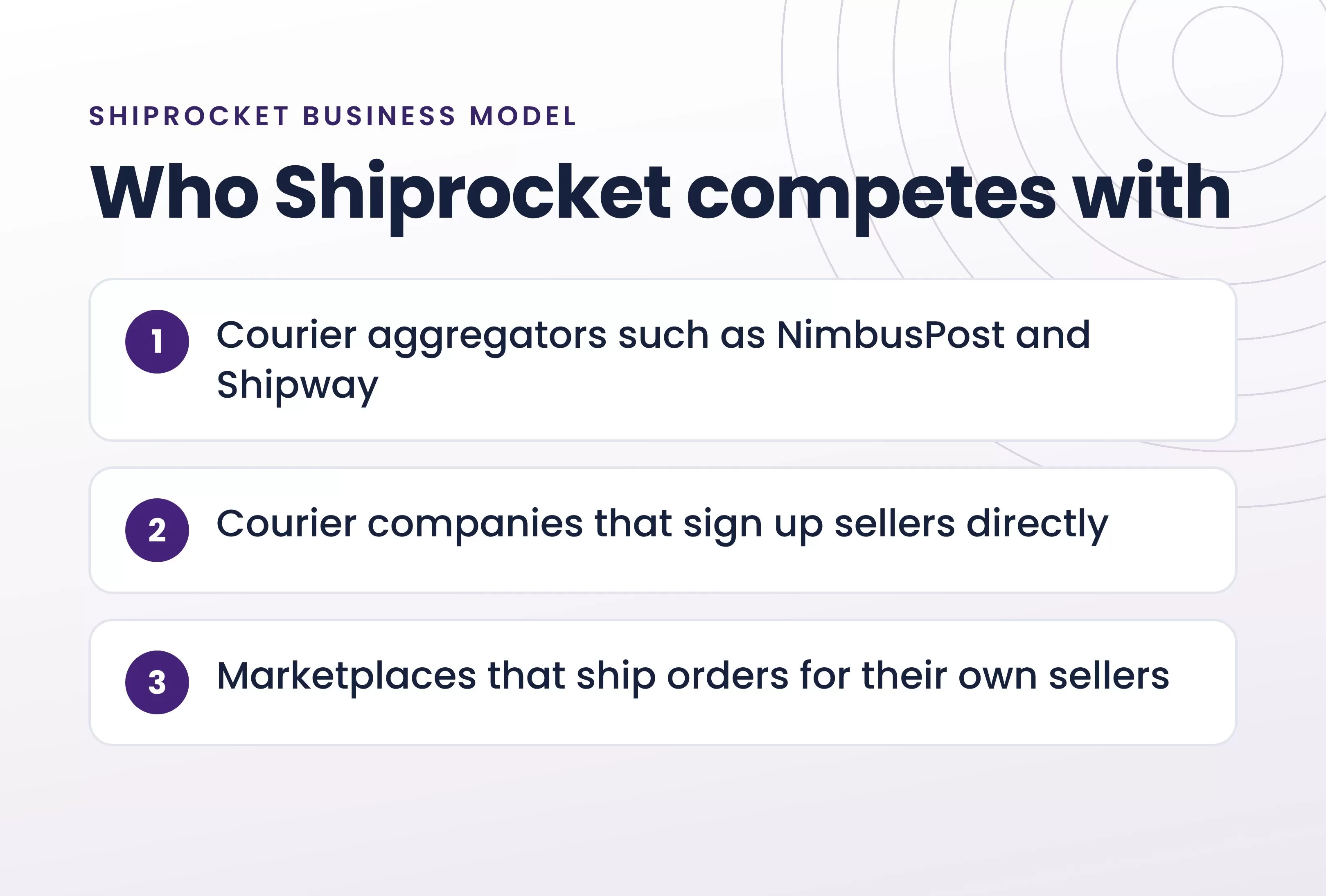
Shiprocket competes with other courier aggregators such as NimbusPost and Shipway, which also offer multi-courier shipping software for online sellers. Courier companies also sign up sellers directly, and marketplaces ship orders for sellers who list on them.
Challenges Shiprocket faces
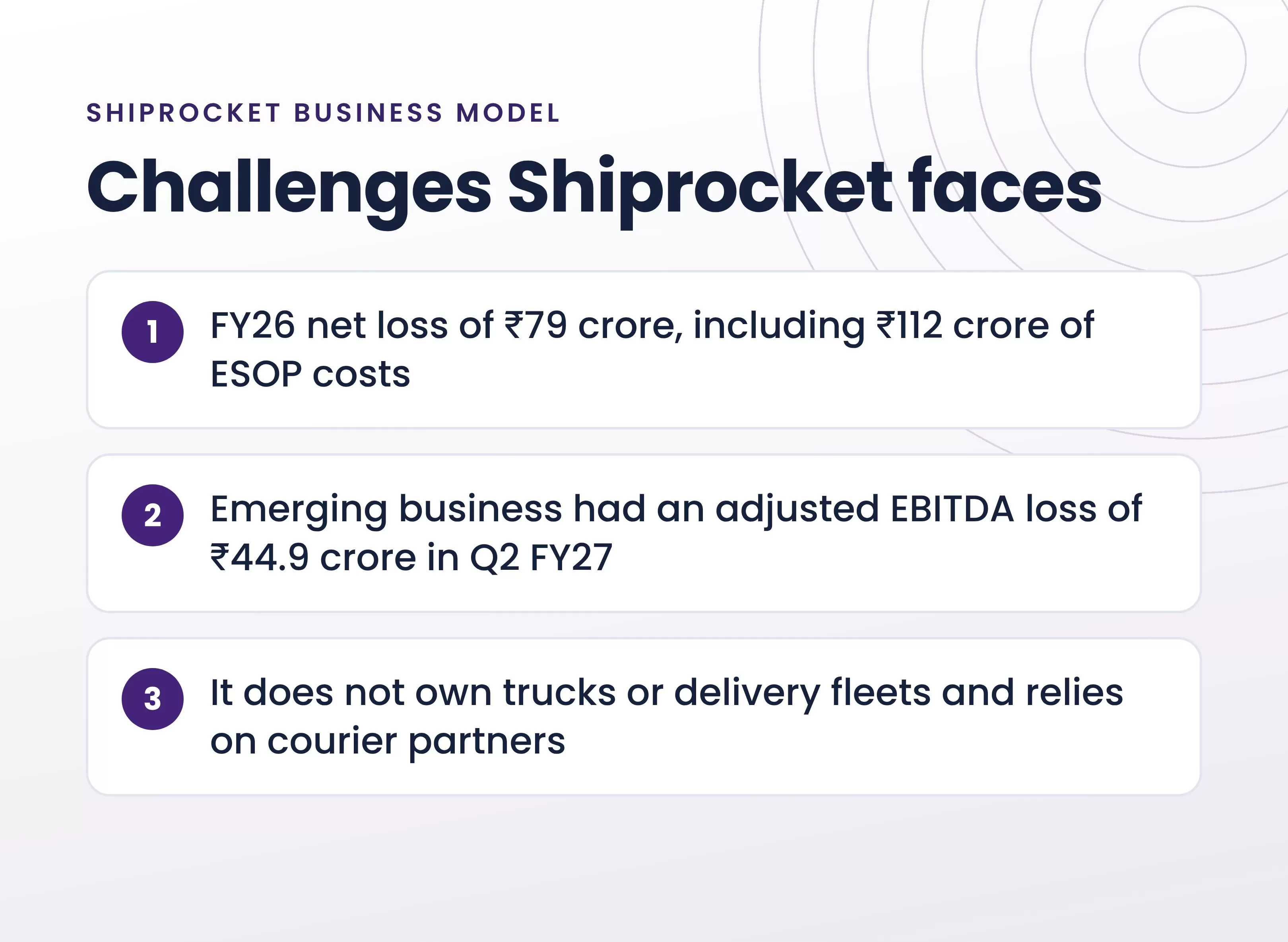
Shiprocket posted a net loss for the full year FY26 and for the first half of FY27, when the net loss was ₹13.1 crore. The Emerging Business had an adjusted EBITDA loss of ₹44.9 crore in Q2 FY27, a margin of minus 21.2%. Because Shiprocket does not own trucks or delivery fleets, it relies on courier partners for every delivery.
Conclusion on the Shiprocket business model
Shiprocket sells shipping, fulfilment, checkout and marketing tools to online sellers and earns a fee on each service, while courier partners carry the parcels. The core shipping business brought in 73.4% of FY26 revenue of ₹2,024 crore, and the newer lines brought in the rest.
The company posted a net loss of ₹79 crore in FY26. In Q2 FY27, the quarter in which its shares listed, revenue was ₹673.6 crore and profit after tax was ₹0.6 crore.