Livspace Business Model of Home Interiors, Stores and Products
How Livspace sells home interiors from design to installation as one order.

Key Takeaways
- FY25 operating revenue rose 23% to ₹1,460 crore.
- The FY25 adjusted EBITDA loss was about ₹131 crore.
- Livspace said in October 2025 it runs over 150 stores in over 90 cities.
- It has raised about $450 million, including $180 million in 2022.
Table of Contents 11 sections
- Livspace at a glance
- What Livspace does and how does Livspace work
- How the Livspace business model makes money
- Is Livspace profitable
- Livspace's Business Model Canvas
- Livspace in numbers
- Livspace founder and journey so far
- Livspace competitors in India
- Recent developments at Livspace
- Conclusion on the Livspace business model
- FAQs
The Livspace business model sells home interiors as a single order: a homeowner gets the design, the materials and the installation from one company. It also sells furniture, decor and home products.
In FY25 (April 2024 to March 2025), Livspace reported operating revenue of Rs 1,460 crore, up 23% from the year before. Its adjusted EBITDA loss came down to about Rs 131 crore, and its net loss was about Rs 242 crore.
Livspace at a glance
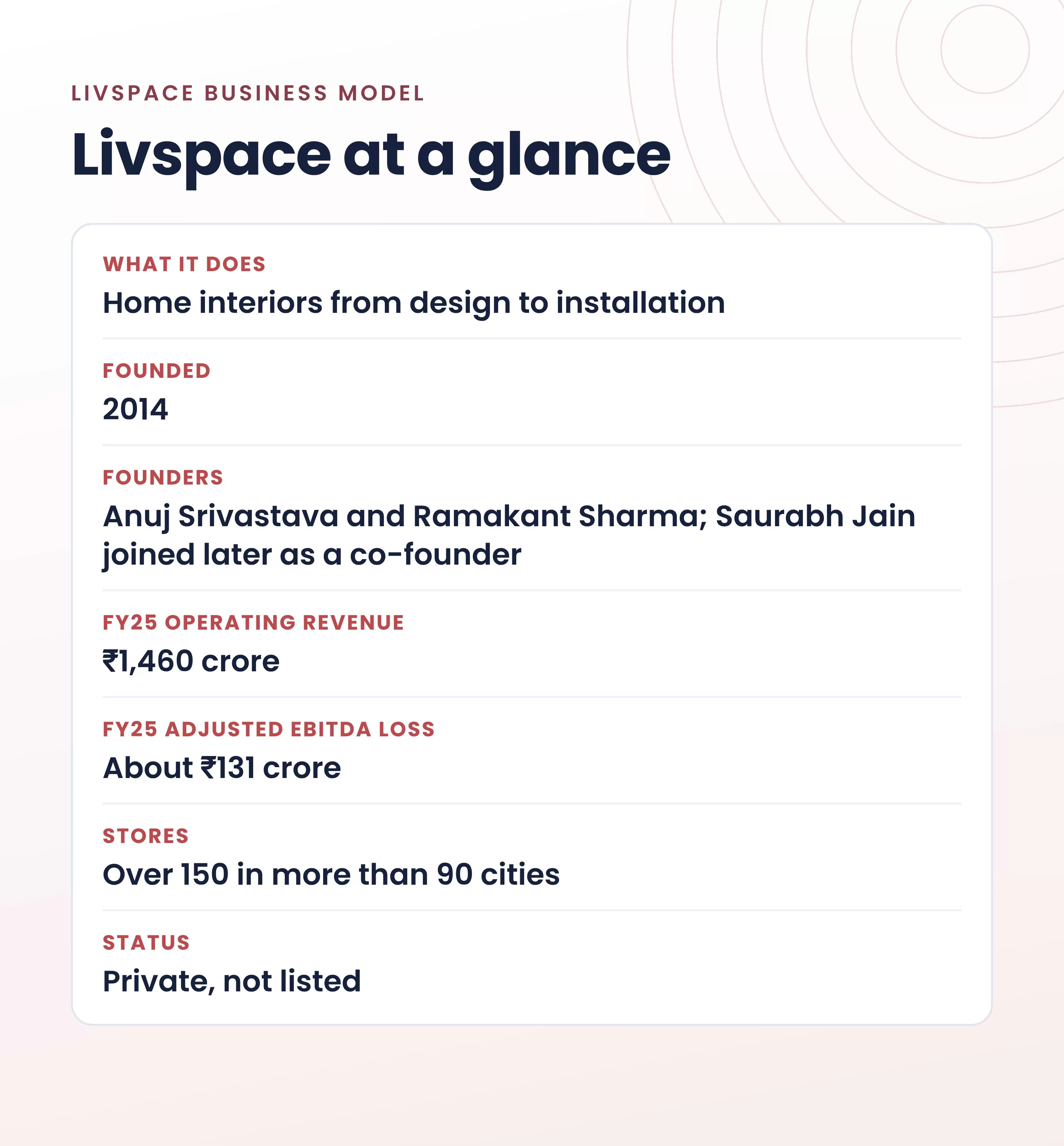
| Item | Detail |
|---|---|
| What it does | Home interiors from design to installation, plus home products |
| Founded | 2014 |
| Founders | Anuj Srivastava and Ramakant Sharma; Saurabh Jain, who joined later, was also a co-founder |
| CEO | Ramakant Sharma (since February 2025) |
| FY25 operating revenue | Rs 1,460 crore |
| FY25 adjusted EBITDA loss | About Rs 131 crore |
| FY25 net loss | About Rs 242 crore |
| Stores | Over 150, in more than 90 cities |
| Funding | About $450 million raised; turned unicorn with a $180 million round led by KKR in February 2022 |
| Listing status | Private company, not listed |
What Livspace does and how does Livspace work
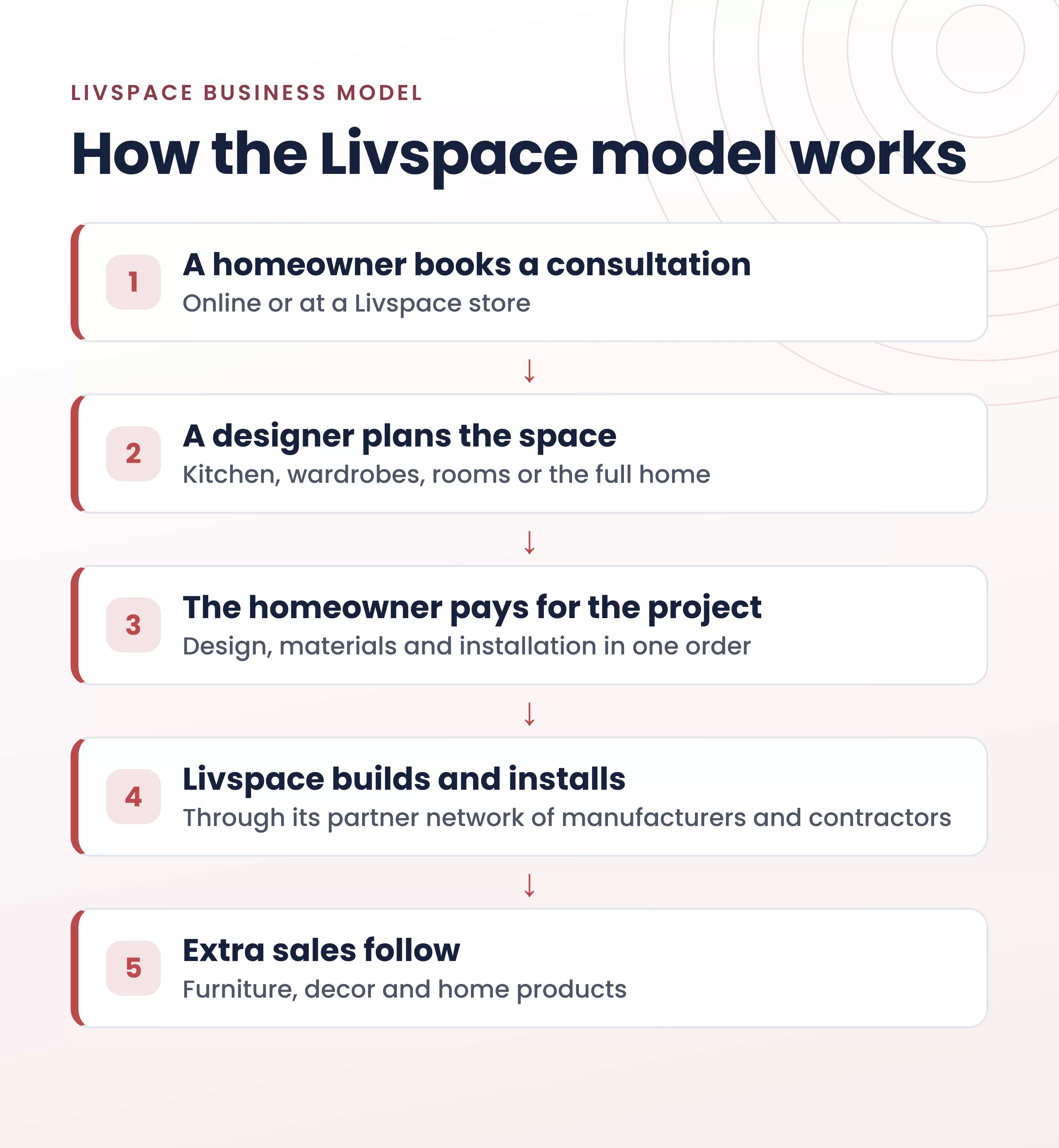
Livspace designs and builds home interiors. A homeowner can order a full home, a modular kitchen, wardrobes or a single room. A Livspace designer plans the space, and the company then manages the materials and the installation.
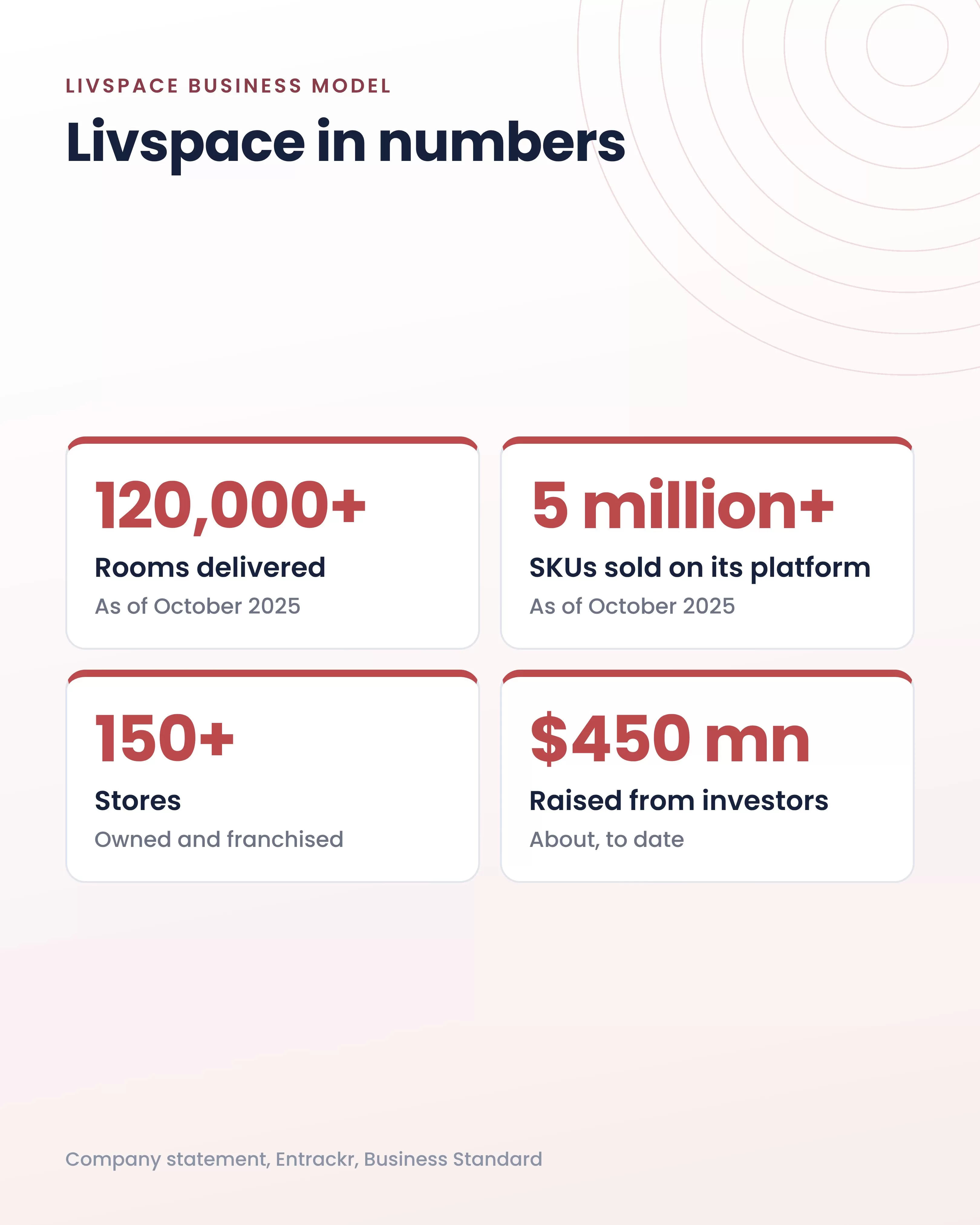
The company describes its service as a one-stop renovation solution, from design to the last-mile fulfilment of every room. It has brought together designers, brands, manufacturers and contractors on one platform. It said in October 2025 that it had delivered over 120,000 rooms and sold over 5 million SKUs through its platform.
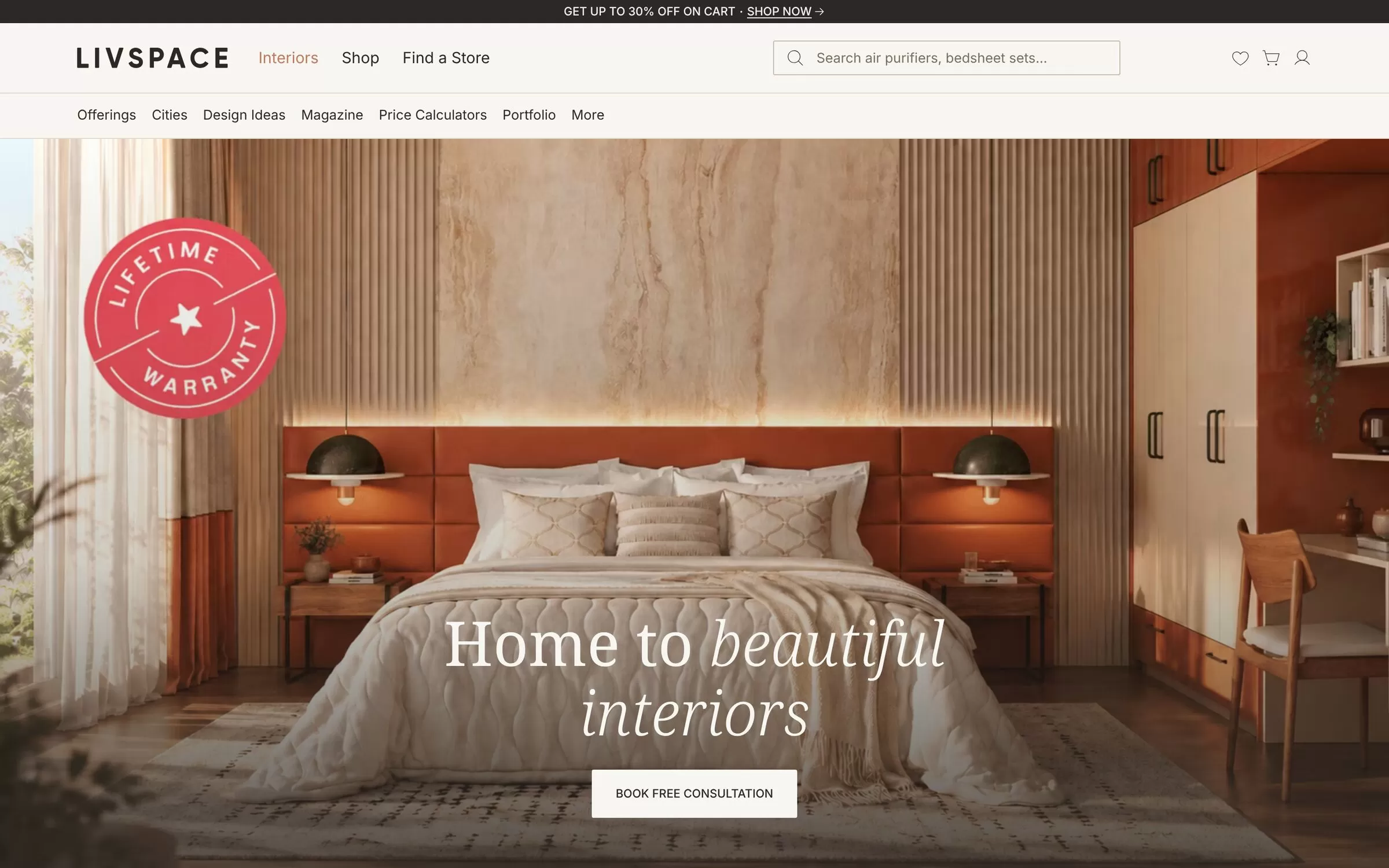
Homeowners can start on livspace.com or at one of its stores. Its website also has a shop for home products. Outside India, it serves Singapore through Qanvast.
How the Livspace business model makes money
Livspace earns money in two ways.
- Interior projects. The homeowner pays for the design, the materials and the installation of a project.
- Home products. Furniture, decor and other home products sold on their own, including through the shop on its website.
Its stores follow two models: company-owned stores and franchise stores run by partners.
Livspace revenue model in numbers
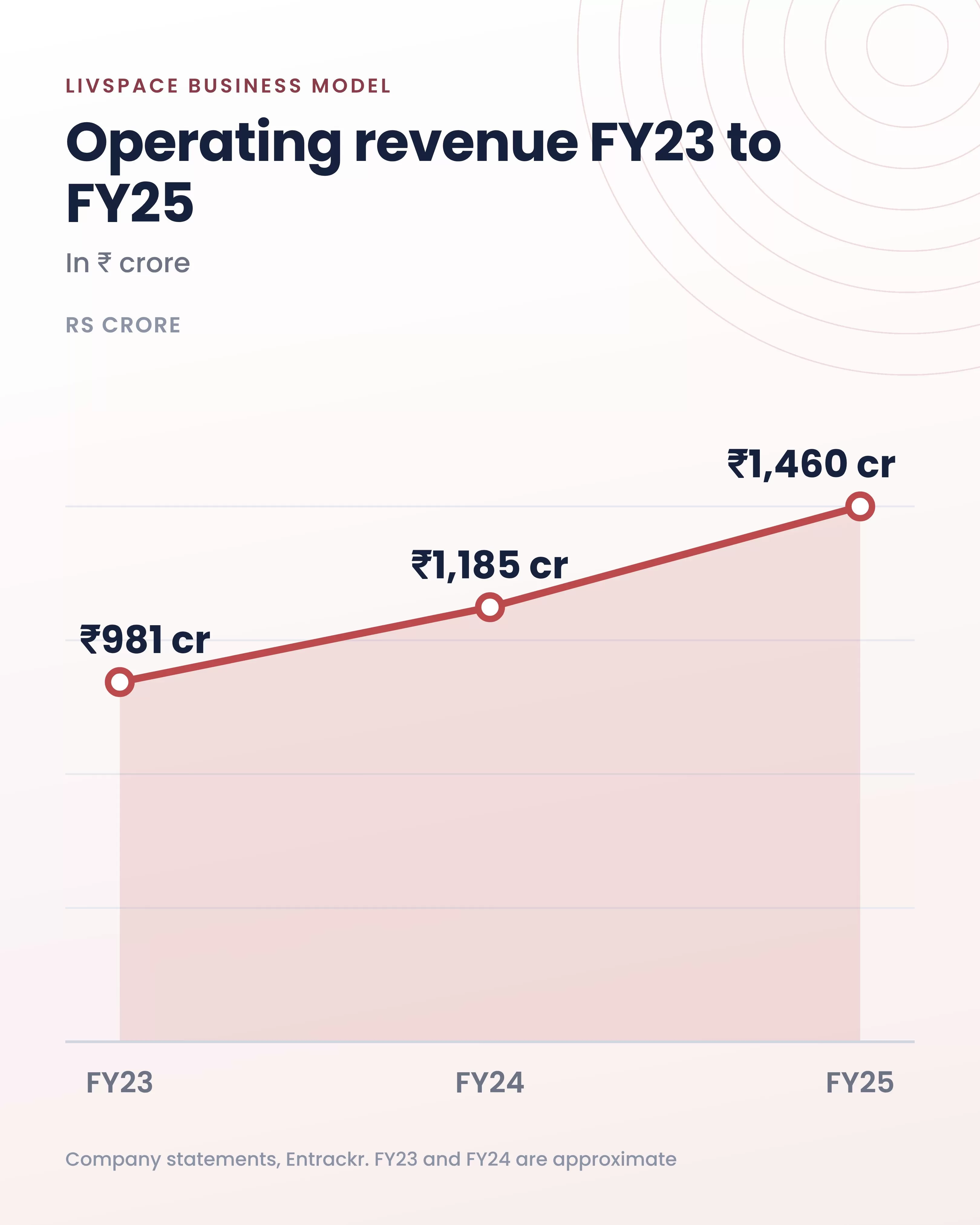
Operating revenue rose from about Rs 981 crore in FY23 to about Rs 1,185 crore in FY24 and Rs 1,460 crore in FY25.
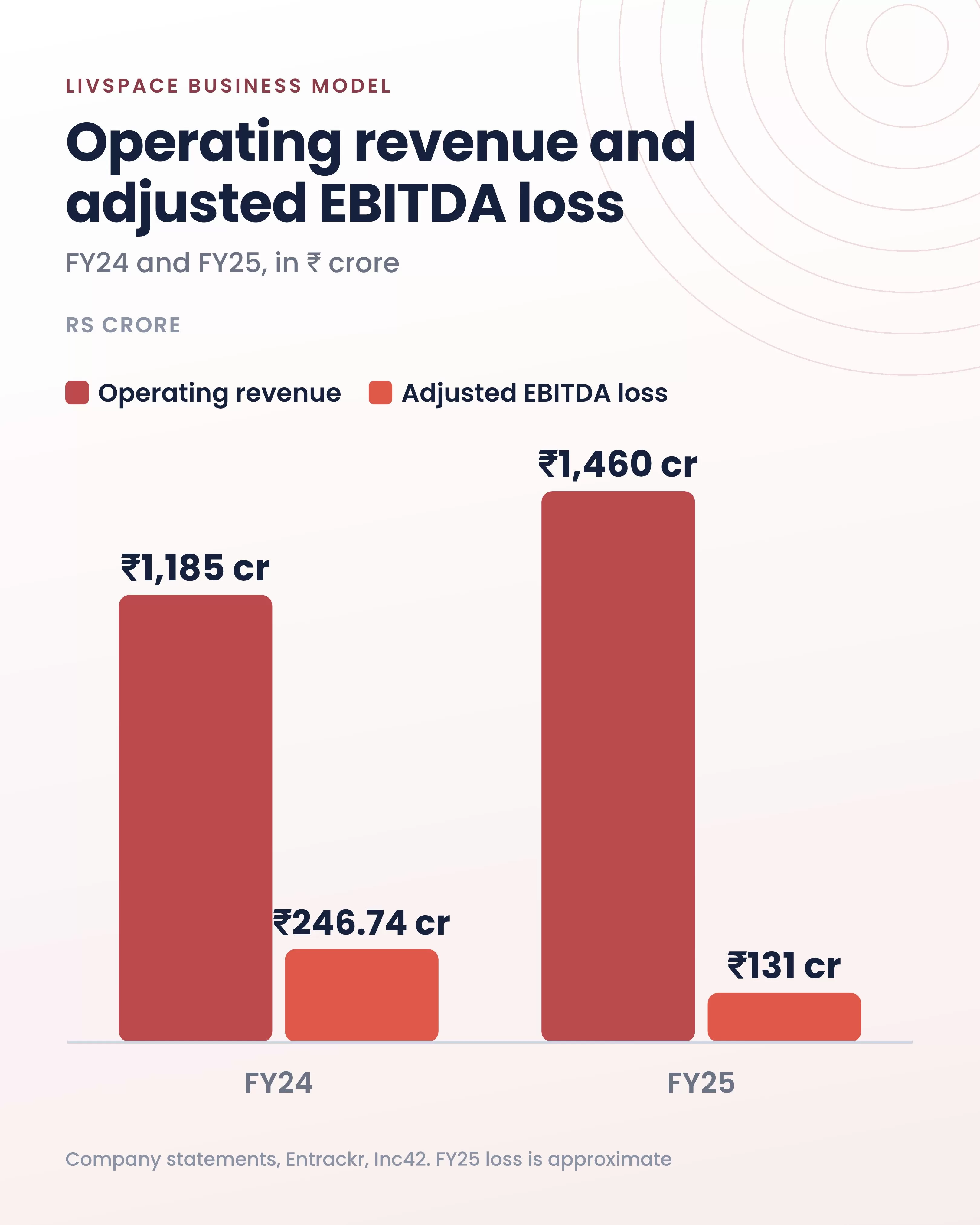
The adjusted EBITDA loss fell from Rs 246.74 crore in FY24 to about Rs 131 crore in FY25.
Is Livspace profitable
No. Livspace still reports a loss. In FY25 its net loss was about Rs 242 crore, and its adjusted EBITDA loss was about Rs 131 crore.
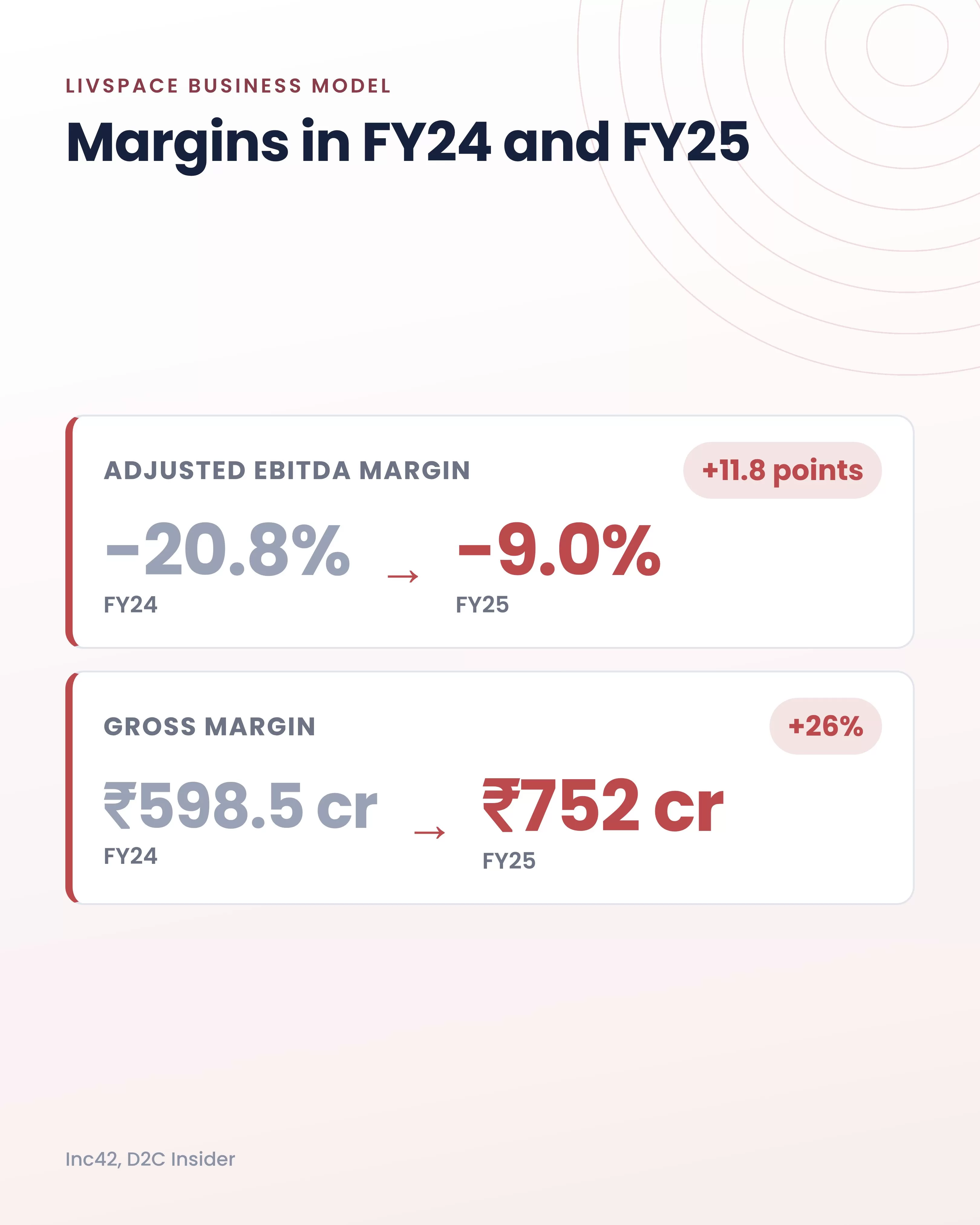
Its gross margin rose about 26% to Rs 752 crore in FY25, from Rs 598.5 crore in FY24. Its adjusted EBITDA margin moved from -20.8% in FY24 to -9.0% in FY25. The company said the FY25 result reflected stronger traction in premium and mass-premium residential segments.
Livspace's Business Model Canvas
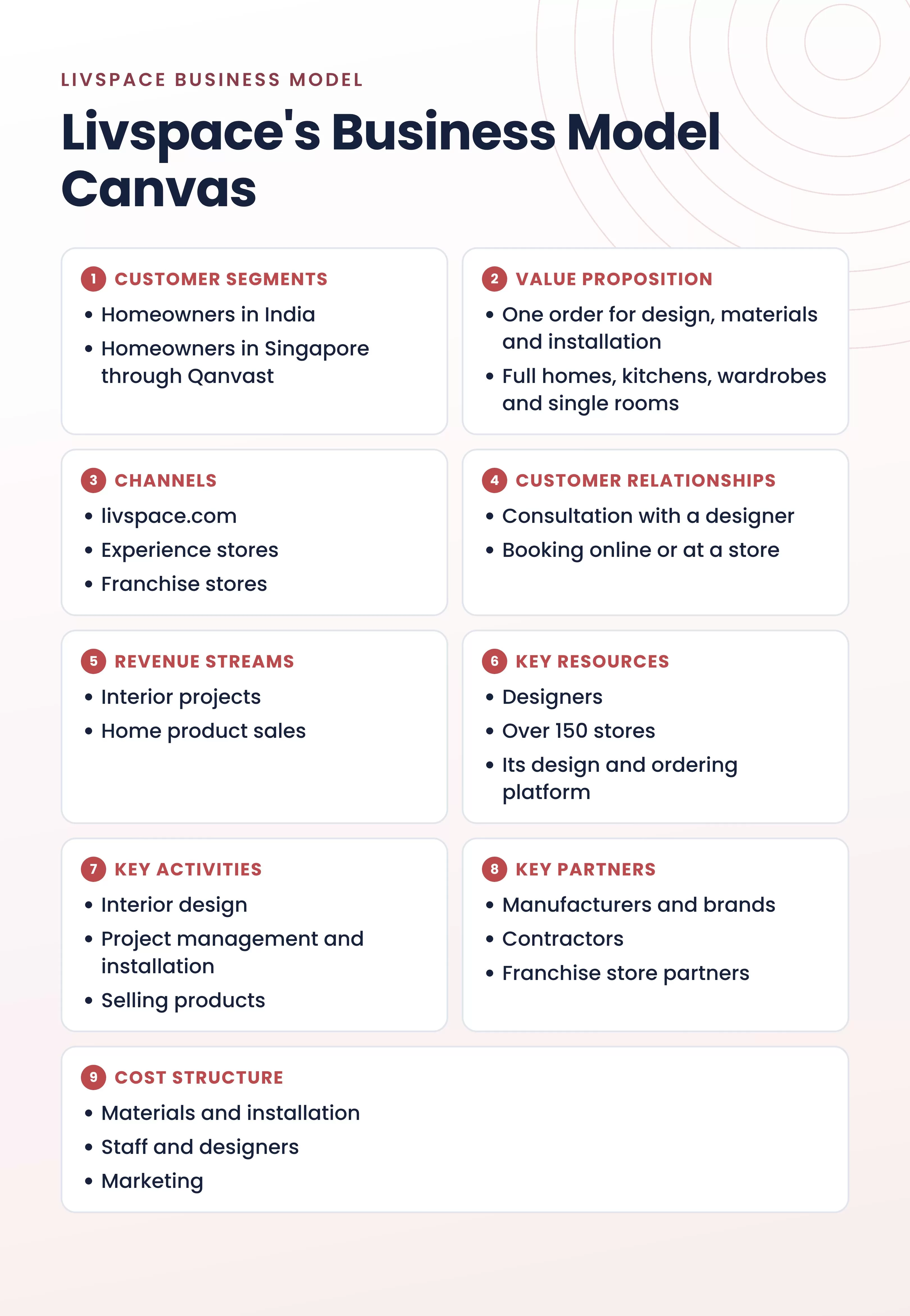
The canvas below sets out the nine building blocks of the business.
Livspace in numbers
The key scale figures the company has shared are the rooms it has delivered, the products sold through its platform, its store count and the money it has raised.
Livspace founder and journey so far
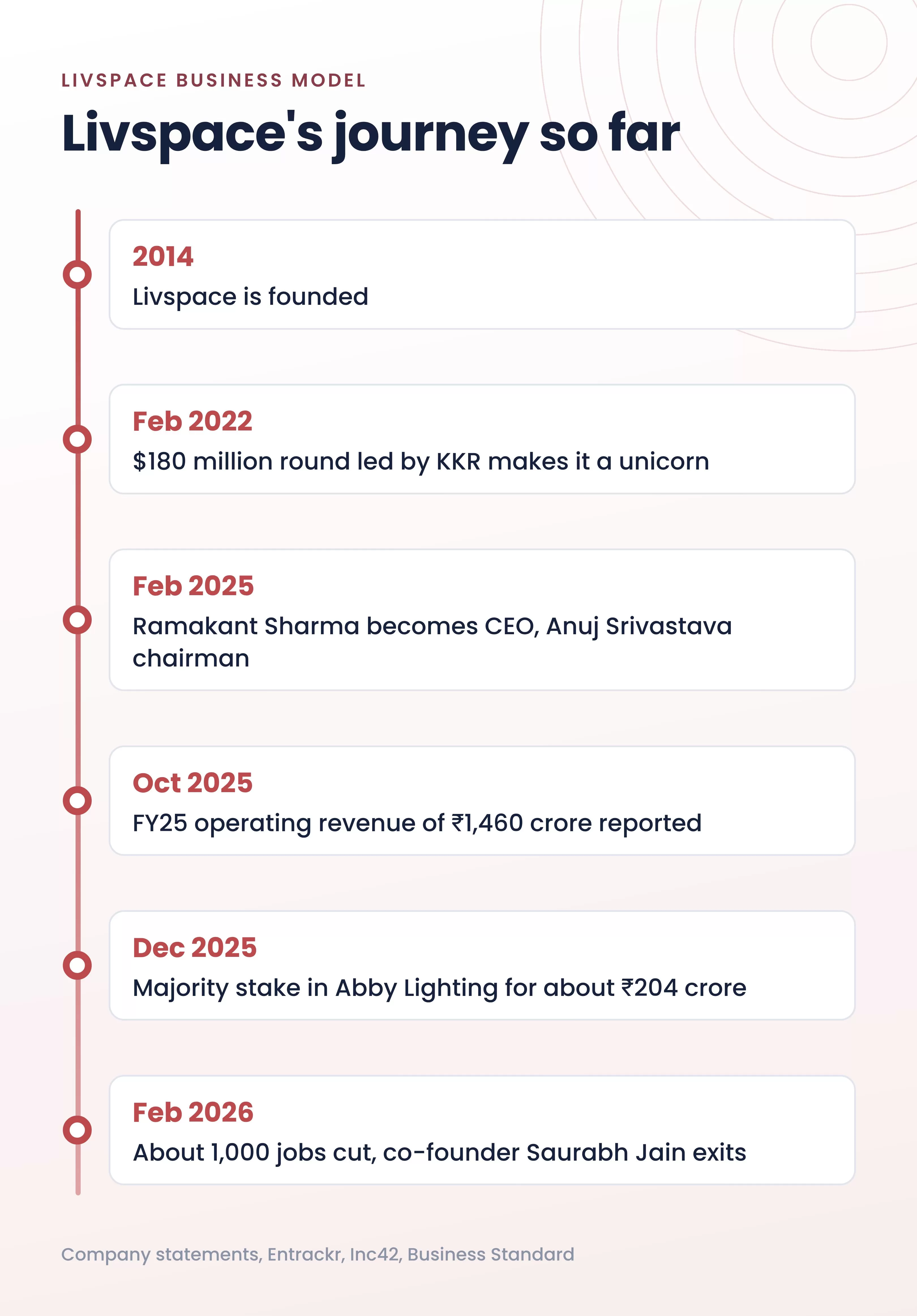
College friends Anuj Srivastava and Ramakant Sharma founded Livspace in 2014. Saurabh Jain, who joined later, was also a co-founder. In February 2025, Ramakant Sharma moved from chief operating officer to chief executive officer, and Anuj Srivastava became chairman of the board.
Livspace has raised about $450 million from investors including KKR, Ingka Group Investments (part of the IKEA retailer Ingka Group), TPG Growth, Goldman Sachs and Bessemer Venture Partners. Its parent company is registered in Singapore.
Is Livspace a unicorn
Yes. In February 2022 it raised $180 million in a round led by KKR and crossed a valuation of $1 billion.
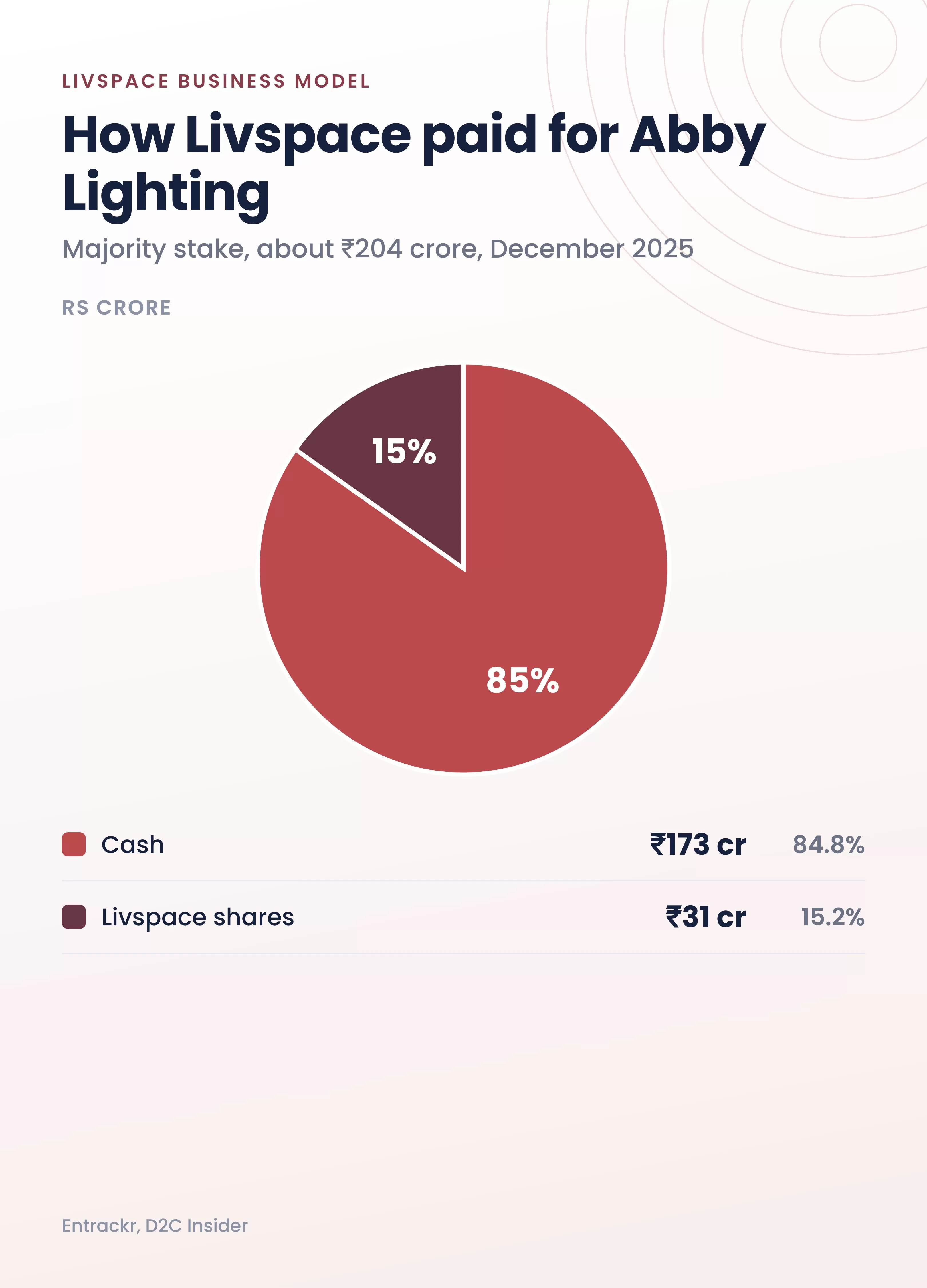
In December 2025, it bought a majority stake in Abby Lighting, a Mumbai-based LED lighting maker, for about Rs 204 crore. It paid Rs 173 crore in cash and Rs 31 crore in Livspace shares.
| When | What happened |
|---|---|
| 2014 | Livspace is founded |
| February 2022 | $180 million round led by KKR makes it a unicorn |
| February 2025 | Ramakant Sharma becomes CEO and Anuj Srivastava becomes chairman |
| October 2025 | Reports FY25 operating revenue of Rs 1,460 crore |
| December 2025 | Buys a majority stake in Abby Lighting for about Rs 204 crore |
| February 2026 | Cuts about 1,000 jobs; co-founder Saurabh Jain leaves after 11 years |
Livspace competitors in India
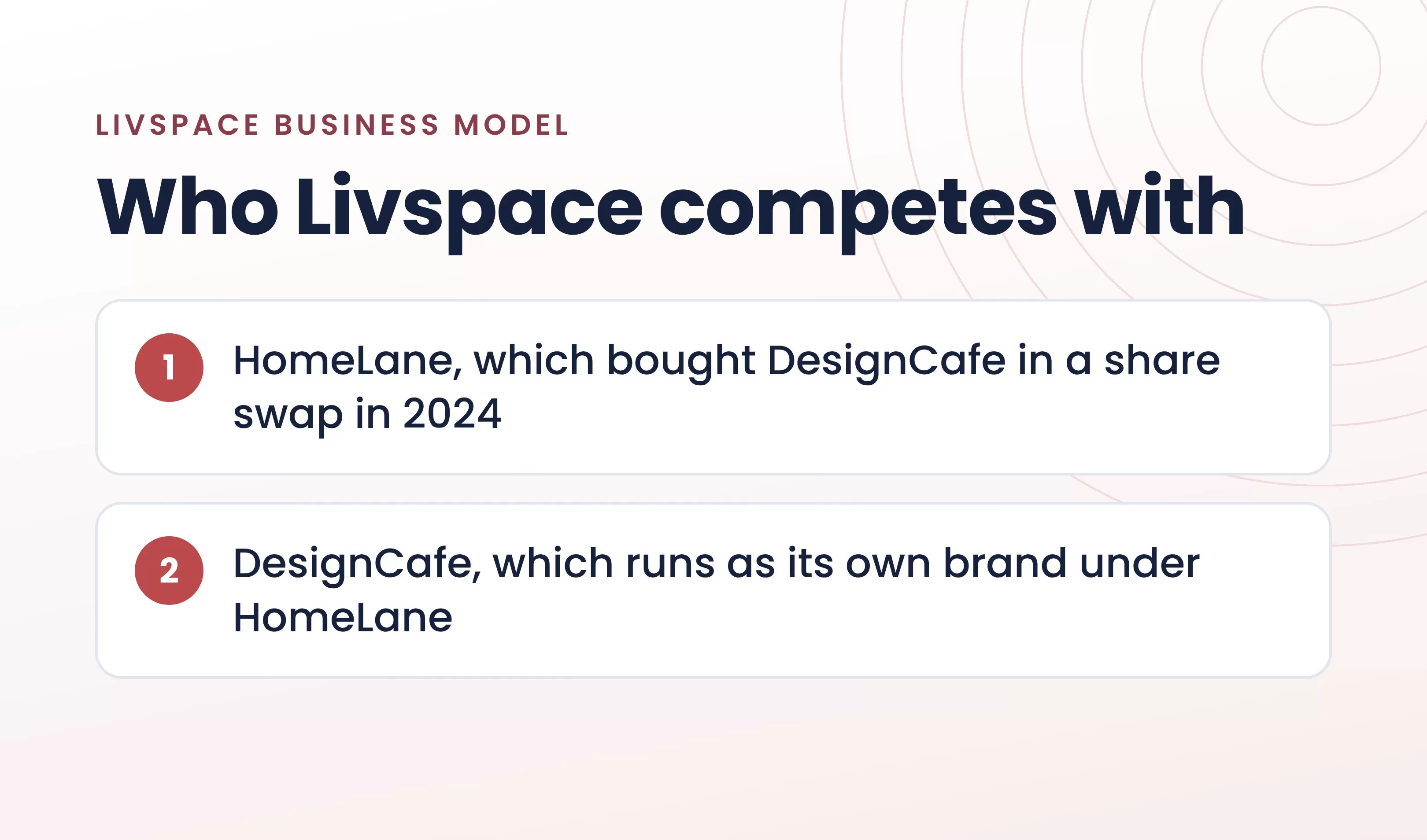
HomeLane also sells full home interiors. In 2024 it bought DesignCafe in a share swap, and DesignCafe continues to run as its own brand.
Recent developments at Livspace
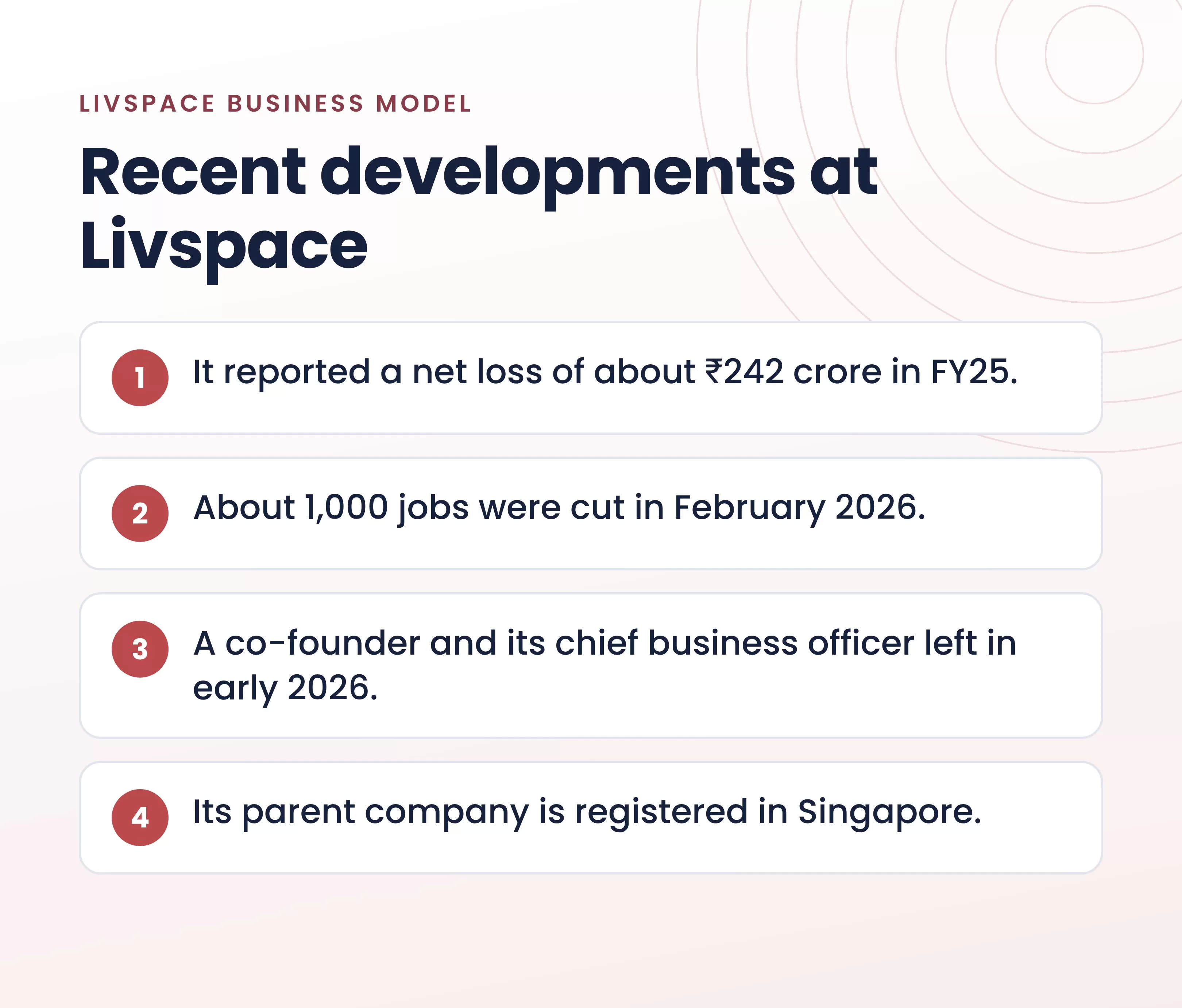
Livspace still reports a net loss. In February 2026 it cut about 1,000 jobs, nearly 12% of its workforce, as part of a reorganisation it linked to the use of AI. Co-founder Saurabh Jain left the same month, and its chief business officer Lalit Mittal also left in early 2026.
Its parent company is registered in Singapore, and the company has said it plans to move its base to India ahead of a stock market listing.
Conclusion on the Livspace business model
Livspace sells home interiors as one order, from design to installation, through its website and over 150 stores, some of them run by franchise partners.
In FY25 it reported operating revenue of Rs 1,460 crore, an adjusted EBITDA loss of about Rs 131 crore and a net loss of about Rs 242 crore.